
Learn
Emergency Roof Tarping & Board-Up After a Storm
Fast tarping and board-up prevents secondary damage after a storm. What the crew does, temporary vs permanent repair, and claim documentation.
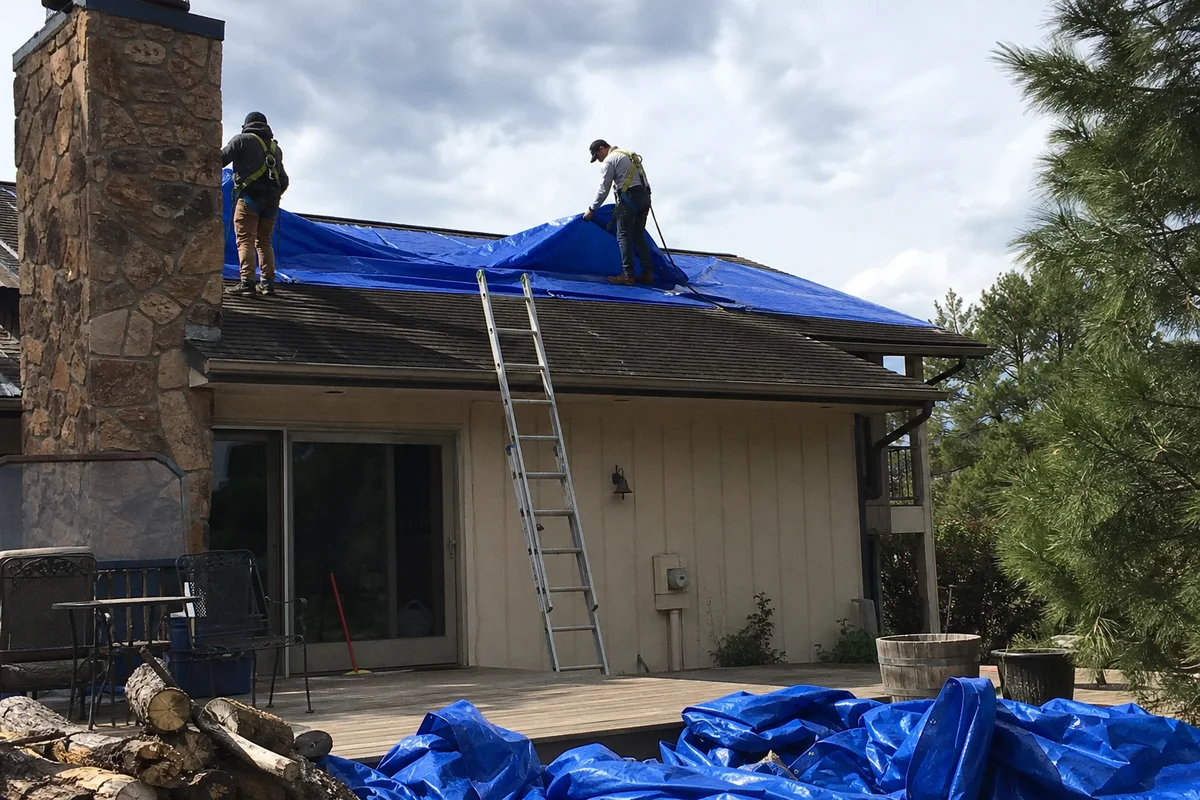
After a storm, the roof over your head might no longer be intact. Between the storm damage and the permanent repair (which can be weeks out — especially in busy seasons), emergency tarping and board-up keep the weather out and your home protected.
Why fast tarping matters
Every hour an open roof stays open:
- Rain, snow, or dew enters the attic
- Wet insulation loses R-value permanently
- Ceiling drywall soaks and sags
- Interior contents get water damage
- Mold conditions develop in 24 to 48 hours
- Total loss creeps upward
We regularly see homes where the tarping happened 5 days after the storm, and the interior damage from those 5 days exceeds the original roof damage cost. Speed matters.
What we do on-site
Safety assessment. Storm-damaged roofs can be unstable. We evaluate before anyone goes up, and we don’t work in unsafe conditions (active weather, high wind, structural concerns).
Tarping. Heavy-duty tarps (10 to 20 mil poly) are cut to size, secured with anchoring strips or lumber battens (not just staples), and wrapped over the ridge or damaged edge. Proper tarping withstands Colorado wind gusts and sheds water toward gutters.
Board-up. Broken windows, damaged doors, and openings get plywood or OSB board-up, secured with appropriate fasteners. Board-up serves both weather protection and security.
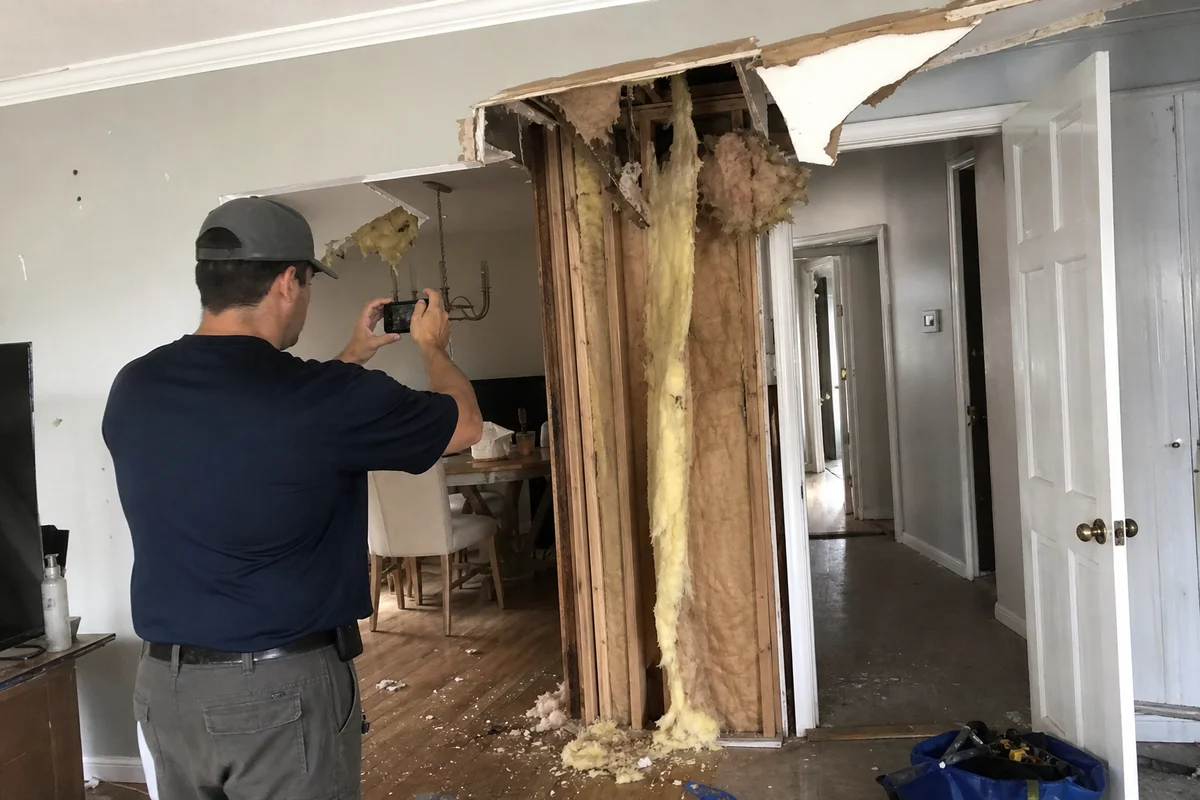
Documentation. Photos and video of damage before, during, and after tarping/board-up. This becomes part of your insurance file.
Interior emergency. If water has already entered, we extract standing water and set up drying equipment simultaneously with the exterior work.
Board-up specifics
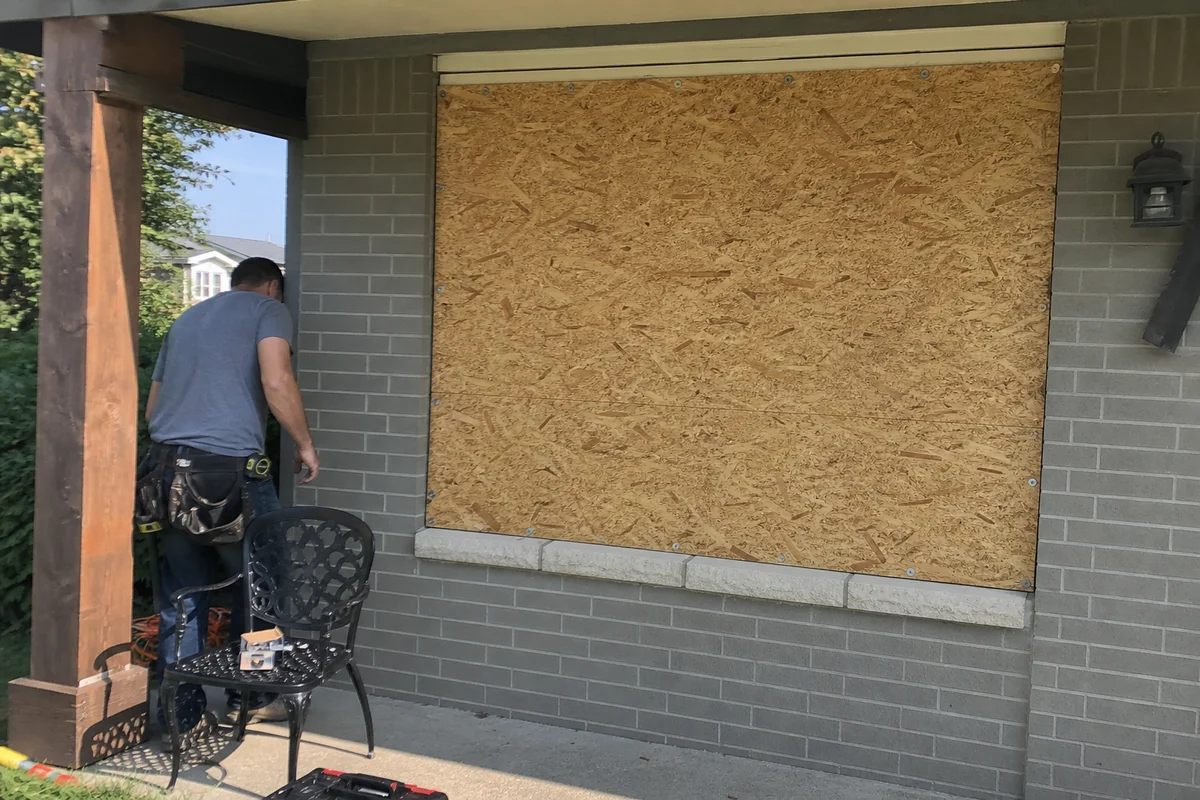
- Windows — plywood or OSB sized to fit the opening, secured to frame with lag screws through the exterior wall or with 2x4 backing anchored inside
- Doors — full-opening board-up if the door is destroyed; hasp and lock addition if the door is intact but frame is damaged
- Garage doors — larger scope, sometimes with temporary bracing
Board-up doesn’t need to be pretty — it needs to be secure, weather-tight, and safe. We do it right.
Temporary vs permanent repair
Emergency tarping and board-up are temporary — designed to protect the home for days to weeks while permanent repair is scheduled. Permanent roof repair is done by roofers (we coordinate with local ones or your preferred contractor). Permanent window and door replacement is done by window contractors.
We handle the mitigation phase and the interior water damage that resulted; we don’t do permanent roof or exterior work. That separation keeps everyone in their lane.
Insurance and documentation
Emergency mitigation is:
- Required by your policy under the duty to mitigate
- Reimbursable — the cost is covered by your claim
- Independent of scope approval — you don’t need the adjuster’s OK to prevent further damage
We document extensively:
- Time-stamped photos of pre-tarping damage
- Photos during and after tarping
- Materials used (tarp size, board-up dimensions, anchoring method)
- Xactimate scope for the emergency work
- Interior damage documentation if applicable
All of this goes to your adjuster with your claim.
When to call us
For any of these, call within hours:
- Visible roof damage (missing shingles, holes, exposed sheathing)
- Water actively entering the home
- Broken windows from wind, hail, or debris
- Damaged doors or garage doors
- Missing siding or exposed wall sheathing
- Downed trees on the structure
Call (720) 842-1950 24/7. We reach Castle Rock, Parker, Highlands Ranch, and Lone Tree fast for storm response.
What NOT to do
- Don’t climb on a wet or damaged roof — falls are a leading cause of storm injuries
- Don’t wait for daylight if water is actively entering — call for emergency response
- Don’t use household tarps on serious damage — they blow off and don’t shed water properly
- Don’t touch downed power lines or wet electrical
- Don’t try to permanent-repair in the middle of a storm — mitigation first
Bottom line
Fast emergency tarping and board-up prevents secondary damage that often exceeds original storm damage. It’s covered by your policy and required as part of your duty to mitigate, and it’s the first step of our full storm damage cleanup. Call us 24/7 at (720) 842-1950. Related: filing a storm damage insurance claim and hail and wind damage assessment.