
Decision Guide
Filing a Storm Damage Insurance Claim in Colorado
Claim documentation, the adjuster process, your duty to mitigate, the deductible-only model, and common denial reasons in Colorado.
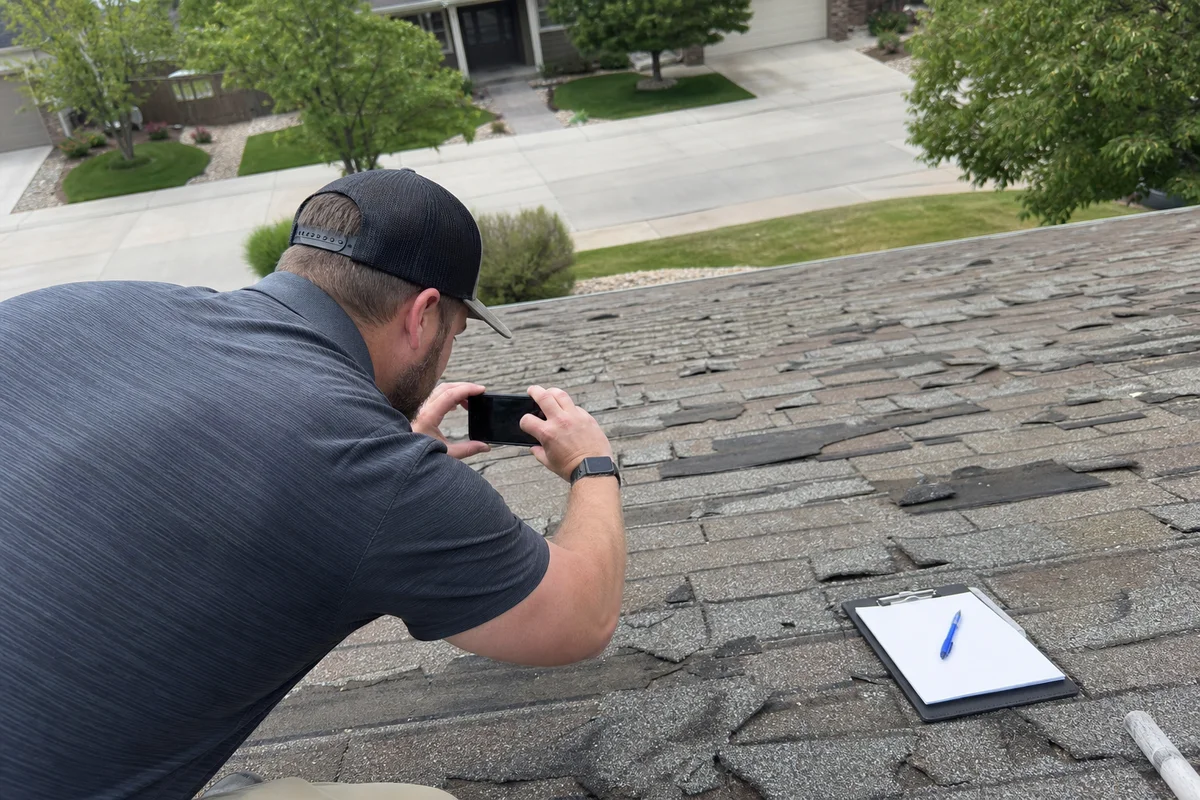
Storm claims are common in Colorado but have their own set of pitfalls. Here’s how to file well.
Report promptly
Call your insurance carrier as soon as you have the immediate emergency under control. You don’t need a full damage assessment yet — just:
- Policy number
- Date of storm
- Brief description of visible damage
- Whether emergency mitigation is needed
The carrier issues a claim number and assigns an adjuster. Follow-up call typically within 24 to 72 hours.
Your duty to mitigate
Standard homeowners policies include a duty to mitigate — you’re required to take reasonable steps to prevent further damage:
- Emergency tarping on damaged roofs
- Board-up on broken windows and doors
- Water extraction if water has entered
- Content protection if damage is spreading
These costs are covered by your claim, and doing them promptly protects your coverage. Failure to mitigate can reduce or void coverage.
See our emergency roof tarping and board-up guide for what mitigation looks like.
Documentation is everything
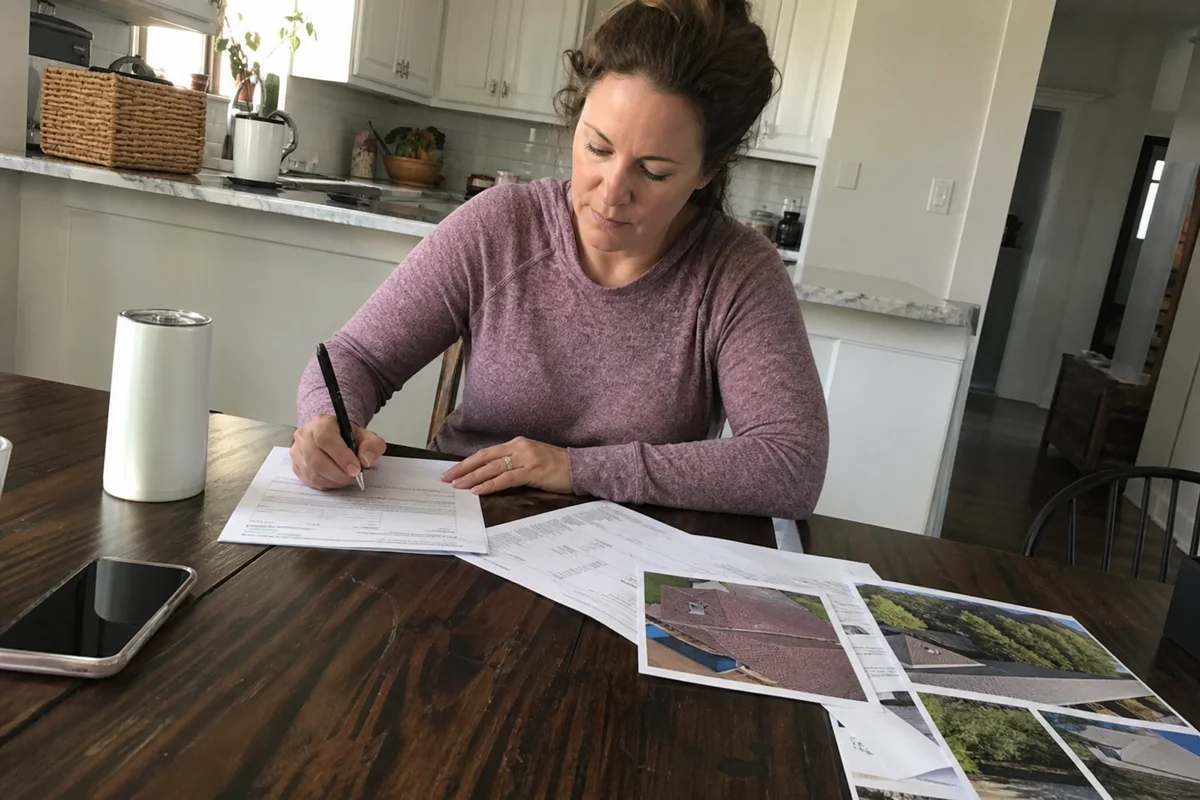
Time-stamped photos and video are your best evidence:
- Exterior damage — every side of the home, roof (from ground), siding, windows, deck
- Interior damage — water stains, wet insulation, damaged contents
- Storm evidence — hail on ground, downed limbs, related property damage
- Mitigation — tarps installed, boarded windows, extraction in progress
- Receipts — everything you spend on emergency work, temporary housing, replacement essentials
Written inventory of damaged contents, especially high-value items.
The adjuster meeting
An adjuster will inspect the property, either in person or via video (adjusters use video for smaller claims). Come prepared:
- Have your documentation ready — all photos and receipts organized
- Have a restoration company on-site if possible — they can walk the scope with the adjuster
- Ask questions — clarify anything you don’t understand
- Don’t sign anything you don’t understand — take time to review before agreeing
The adjuster generates a scope with pricing (usually via Xactimate). This becomes the basis for your claim payment.
Xactimate scope
We generate Xactimate scope for every job. Adjusters use the same software, which means our scope is in the format and pricing they expect. That eliminates 90% of negotiation friction.
If you’re using a restoration company that doesn’t use Xactimate, expect back-and-forth on pricing that can delay the claim.
Colorado’s hail deductible situation
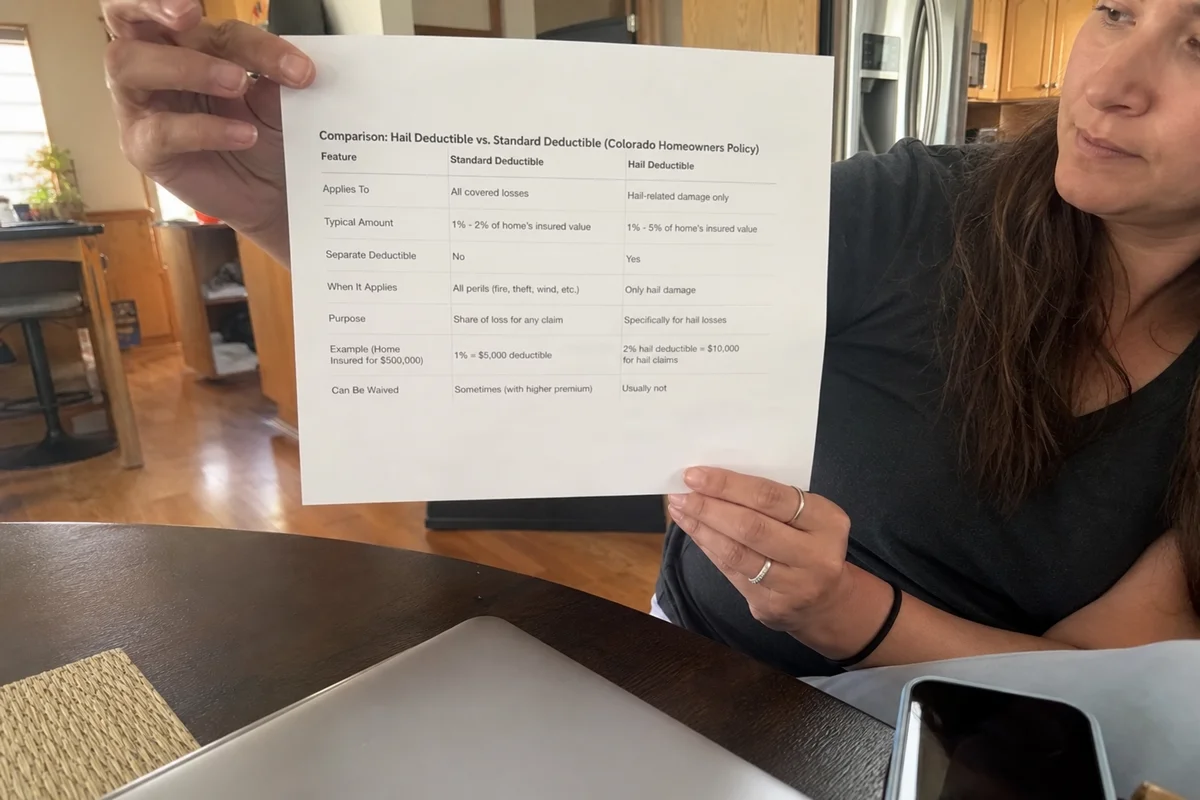
Many Colorado homeowners policies now include a separate hail deductible, often expressed as a percentage of dwelling coverage:
- 1% hail deductible on $500,000 dwelling coverage = $5,000
- 2% hail deductible on $500,000 dwelling coverage = $10,000
Compare that to a $500 or $1,000 standard deductible. Big difference.
Check your policy. If your hail deductible is 1% or higher, you may find that smaller hail damage isn’t worth filing at all. Larger damage still is — even a $10,000 deductible pays off on a $30,000+ roof replacement.
Some homeowners opt to buy down their hail deductible for an annual premium increase. Worth considering in the Front Range hail corridor.
Common denial reasons
- Pre-existing damage attributed to the storm — adjusters look for signs of age-related wear
- Missed reporting deadlines — most policies require prompt notification
- Statute of limitations — Colorado is generally 1 year for hail claims
- Cosmetic damage exclusions — some newer policies exclude “cosmetic” damage that doesn’t affect function
- Undocumented damage — you can’t collect for what you can’t prove
- Duty to mitigate failure — waiting weeks to tarp a damaged roof
Storm chasers: be careful
After major hail events, out-of-state contractors (“storm chasers”) often flood into the affected area. Signs to watch for:
- Door-to-door solicitation
- Offers to “waive” your deductible (this is insurance fraud)
- Assignment of Benefits (AOB) requests
- Requests for large deposits upfront
- Unlicensed or unregistered contractors
- Pressure to sign contracts immediately
Legitimate local restoration companies don’t door-knock and don’t waive deductibles.
Our approach
We’re local (based in Englewood, serving Douglas County and South Denver), IICRC-certified, and use Xactimate scope. Our owner is a CPA and handles adjuster coordination, subrogation, and direct billing. In most covered losses, you pay only your deductible.
Call (720) 842-1950 for emergency storm damage cleanup or a free damage assessment. Related: hail and wind damage inspection and emergency tarping and board-up.