
Learn
Large-Loss Commercial Restoration
Rapid mobilization, national storm-team resources, scope for retail, hospitals, universities, and government, plus adjuster coordination.
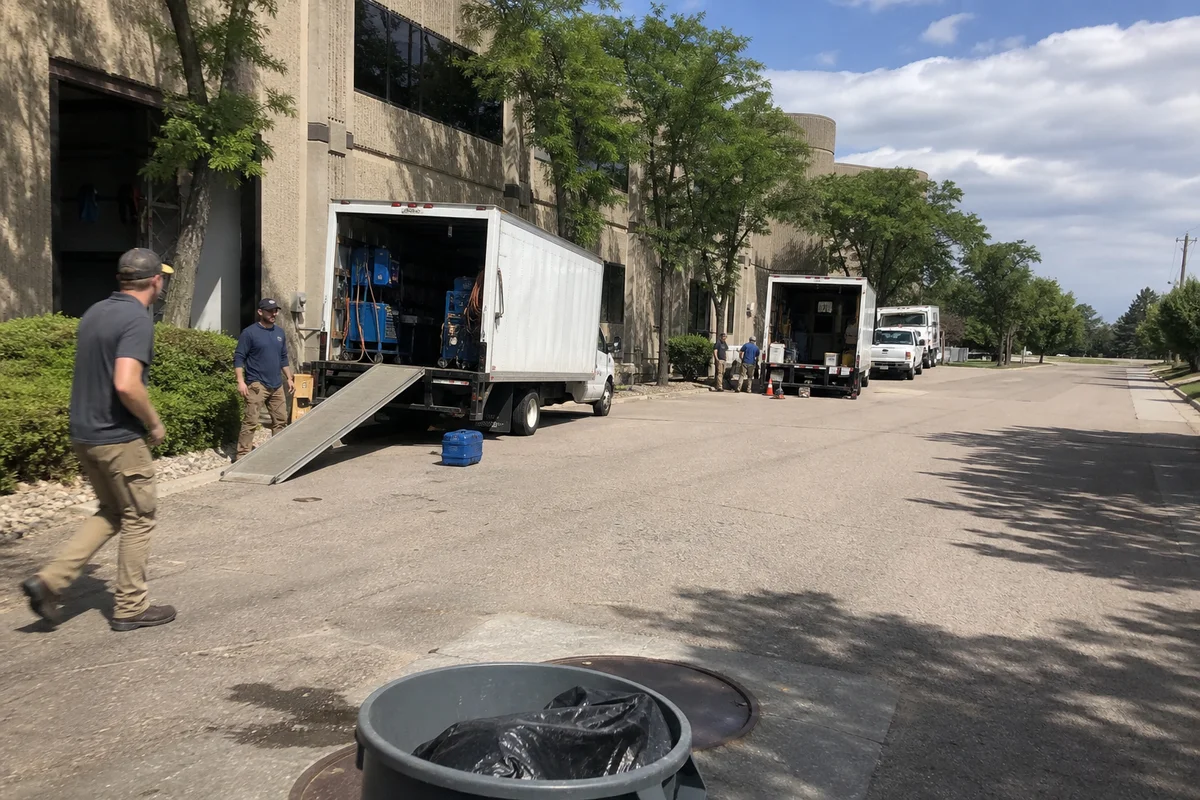
Large-loss commercial restoration is fundamentally different from residential work. The scale of equipment, coordination, and business considerations means specialized capabilities matter. Here’s how we handle major commercial losses.
What qualifies as a large loss
There’s no single dollar threshold, but generally:
- Physical scope: entire floors, wings, or facilities affected
- Business impact: revenue-critical operations disrupted
- Complexity: multiple simultaneous mitigation needs (water, structural, HVAC, contents)
- Timeline pressure: rapid restoration required to minimize business interruption
- Insurance dollars: typically $100,000 to millions
Types we handle:
- Retail centers with major water or fire damage
- Hospitals and medical facilities with critical operations
- Restaurants and food service after major loss
- Warehouses and light industrial after water intrusion
- Universities and schools during break periods
- Government properties with public service requirements
- Multi-family properties with widespread damage
Rapid mobilization
For local Douglas County and South Denver commercial calls, our response is immediate. Within an hour of the call:
- Emergency crew on-site for immediate mitigation
- Project manager en route for scope and coordination
- Equipment mobilization — extraction, drying, HEPA filtration
- Adjuster notification initiated
For major events (regional storms, multi-facility fires), we activate our national storm-team network — additional crews, equipment, and semi-truck-scale dehumidifiers deploy from partner locations.
The scale of equipment
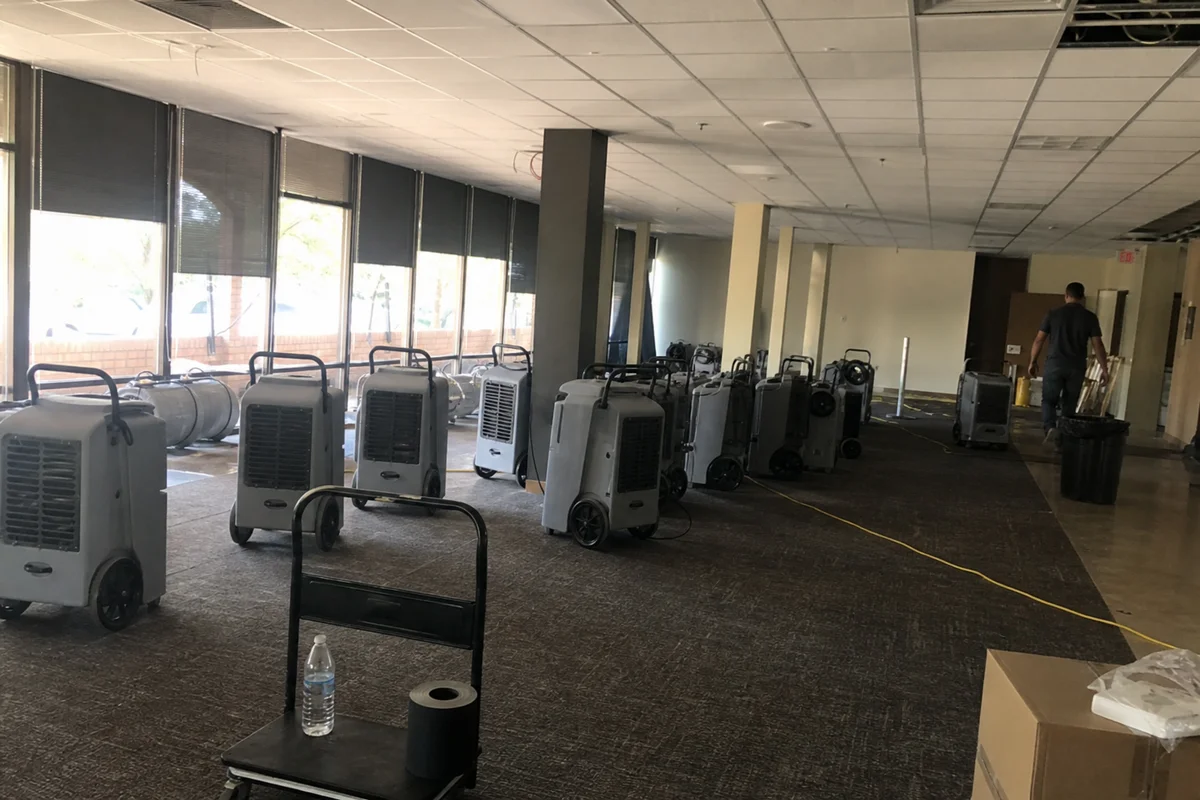
Large commercial jobs require equipment beyond typical residential:
- Truck-mounted extractors with commercial pump capacity
- Desiccant dehumidifiers — thousands of pints per day capacity
- Trailer-mounted generators for facilities without adequate power
- HEPA scrubbers at industrial scale
- Air movers in hundreds, not dozens
- Containment materials for entire floor sections
- Restoration trailers for on-site crew operations
We stage this equipment quickly. Standard job might use 20 air movers; a large commercial job might use 200.
Project management
Every large loss gets a dedicated project manager who:
- Coordinates crews and equipment
- Maintains adjuster communication (often multiple carriers on multi-tenant properties)
- Provides daily updates to owner, property manager, and stakeholders
- Manages timeline with revenue-critical areas prioritized
- Coordinates subcontractors (roofers, electricians, HVAC) for reconstruction
- Handles regulatory issues if any (asbestos testing, environmental permits)
- Documents everything for insurance and legal purposes
For very large losses, a full project team supports the PM — often including a dedicated administrator, safety officer, and contents specialist.
National storm-team capability
Our local ownership is backed by a national brand with restoration capability that spans the country. When a major event exceeds local resources — a major hail cell hitting the whole Front Range, or a multi-building fire — we can bring in:
- Additional certified crews
- Semi-trailer-scale drying equipment
- Specialized restoration teams (art conservation, document recovery, electronics)
- Project management support
This is what makes us able to handle municipal and hospital-scale losses that would overwhelm a small local shop.
Working with facility stakeholders
Commercial losses involve more than just the property owner:
- Tenants need communication and continuity plans
- Employees need safety information and return-to-work timing
- Customers or patients need service continuity
- Vendors and suppliers need notification of delivery/operation impacts
- Insurance carriers (often multiple) need coordinated documentation
- Property management needs regular status updates
- Corporate ownership needs executive-level briefings
Our project managers handle this communication ecosystem.
Adjuster coordination for commercial
Commercial claims are more complex than residential:
- Multiple policies may apply (property, business interruption, contents)
- Xactimate scope at commercial pricing tiers
- Longer negotiation timelines on major scope items
- Public adjuster involvement on many large losses
- Reservation of rights letters requiring careful navigation
We coordinate throughout. Owner receives clear scope and pricing; adjuster gets professional documentation; the claim moves.
Business interruption considerations
Business interruption coverage (BI) is often more valuable than physical damage coverage on large commercial losses. Documentation of:
- Lost revenue during restoration
- Continuing expenses (rent, payroll, utilities)
- Extra expenses (temporary space, equipment rental)
- Rebuild timeline
All contribute to BI recovery. We provide daily documentation that supports BI claims. See our minimizing business interruption guide.
Preventive: Emergency Ready Plans
The biggest lever for commercial loss response is pre-planning. Facilities with our free Emergency Ready Plans see:
- Faster mobilization (we already know the facility)
- Faster shutoff (we know where valves are)
- Faster containment (we know which areas are critical)
- Faster restoration overall
See our Emergency Ready Plans guide.
Call us
For commercial restoration emergencies, call (720) 842-1950 24/7. For preventive planning (free Emergency Ready Plans), reach out here. Related: emergency ready plans for facilities and minimizing business interruption.