
Decision Guide
Minimizing Business Interruption After Property Damage
Phased mitigation to keep areas operational, containment during business hours, timeline drivers, and coordination with insurance and stakeholders.
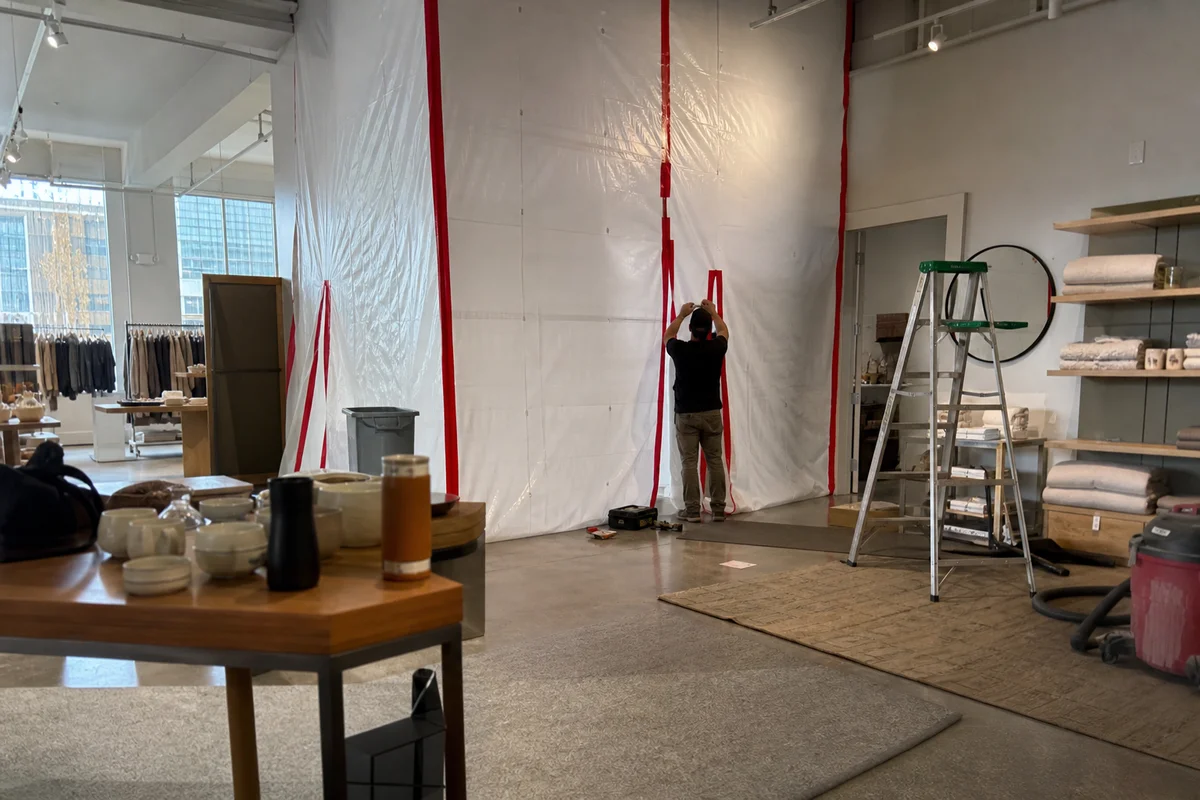
For commercial properties, restoration isn’t just about the building. It’s about keeping the business open, protecting revenue, and coordinating with tenants, employees, customers, and insurers. Every hour of interruption has a cost. Here’s how we minimize it.
Phased mitigation approach
Instead of shutting down the whole facility, we work in phases:
Phase 1: Emergency containment (hours 1-4).
- Stop the source (water shutoff, fire cleanup, sewage containment)
- Isolate affected areas with containment barriers
- Extract standing water immediately
- Assess scope and identify revenue-critical zones
Phase 2: Mitigation of affected areas (days 1-3).
- Structural drying in contained zones
- Removal of unsalvageable materials
- Deep cleaning and disinfection
- Continued containment isolation
Phase 3: Restoration and reconstruction (days 3+).
- Materials replacement
- Systems restoration (HVAC, electrical, plumbing)
- Finishes and cabinetry
- Final cleaning and turnover
Throughout, unaffected areas of the facility keep operating. Customers and tenants stay in service where possible.
Containment during business hours
Our containment strategy:
- Physical barriers with clean, professional appearance (no exposed 2x4s and torn poly)
- Negative air pressure so containment doesn’t affect operating areas
- HEPA filtration ensuring air quality outside containment stays clean
- Discreet crew presence — professional appearance, clean equipment
- Sound management — noisy work scheduled after-hours where feasible
- Signage for customers explaining any visible work
Customers and tenants often barely notice the work is happening.
After-hours and off-hours work
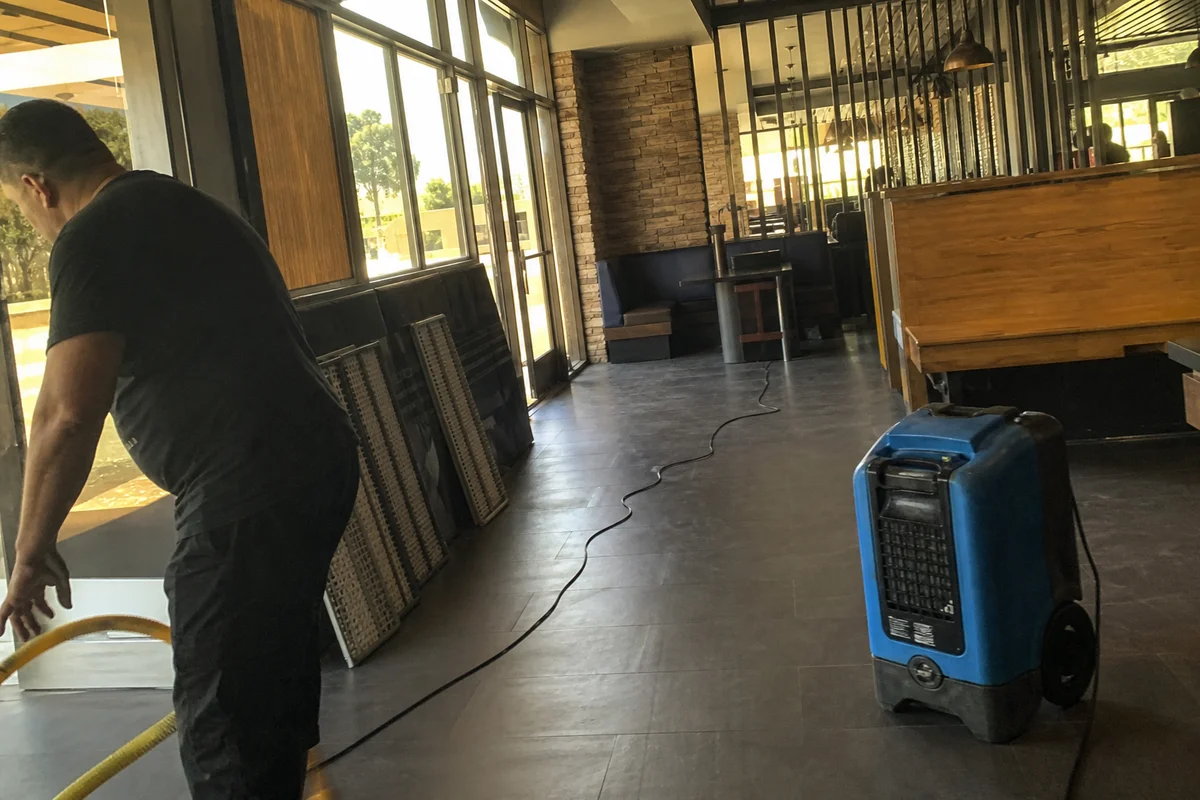
For many commercial jobs, we work outside business hours:
- Overnight demolition and setup
- Weekend intensive work phases
- Early morning cleanup before opening
- Holiday and closed-day major operations
This adds cost but keeps you in business. For most commercial clients, the math favors after-hours work whenever revenue is at stake.
Prioritizing revenue-critical areas
Not all square footage is equal. In any facility:
- Revenue-generating areas get priority (retail floor, patient rooms, kitchen)
- Customer-facing areas get priority (lobby, waiting rooms, restaurants)
- Systems supporting operations get priority (server rooms, medication storage)
- Back-office and storage can wait longer if needed
Our project managers work with your operational leadership to identify what matters most, then structure the work sequence accordingly.
Timeline drivers
What determines how fast we can restore:
Scope size. More damage takes more time. But phasing means partial reopening usually happens before full completion.
Contents and equipment. Complex tenant fit-outs, medical equipment, specialty kitchens all add time to full restoration.
Materials availability. Specialty finishes, custom cabinetry, and made-to-order items add lead time. For common finishes, we can typically source within days.
Subcontractor coordination. HVAC, electrical, roofing, plumbing subs need to be available and scheduled.
Insurance approval. Scope approval delays add time. This is where fast documentation and Xactimate scoping matter.
Regulatory issues. Pre-1980 buildings requiring asbestos testing add time. See our asbestos and lead testing guide.
Coordination with stakeholders
Commercial restoration requires managing multiple parties:
Ownership and property management:
- Daily updates
- Scope decisions
- Cost approvals
- Timeline adjustments
Tenants:
- Impact assessment
- Communication about work timing
- Coordination on access
- Business continuity support
Employees:
- Safety information
- Return-to-work timing
- Alternate work arrangements if needed
Customers or patients:
- Continuity of service
- Communication about any disruption
- Alternate location information if applicable
Insurance carriers:
- Multiple policies often apply (property, business interruption, contents)
- Coordinated documentation
- Regular status updates
Adjacent property owners:
- Notification if work affects them
- Access coordination if needed
Business interruption documentation
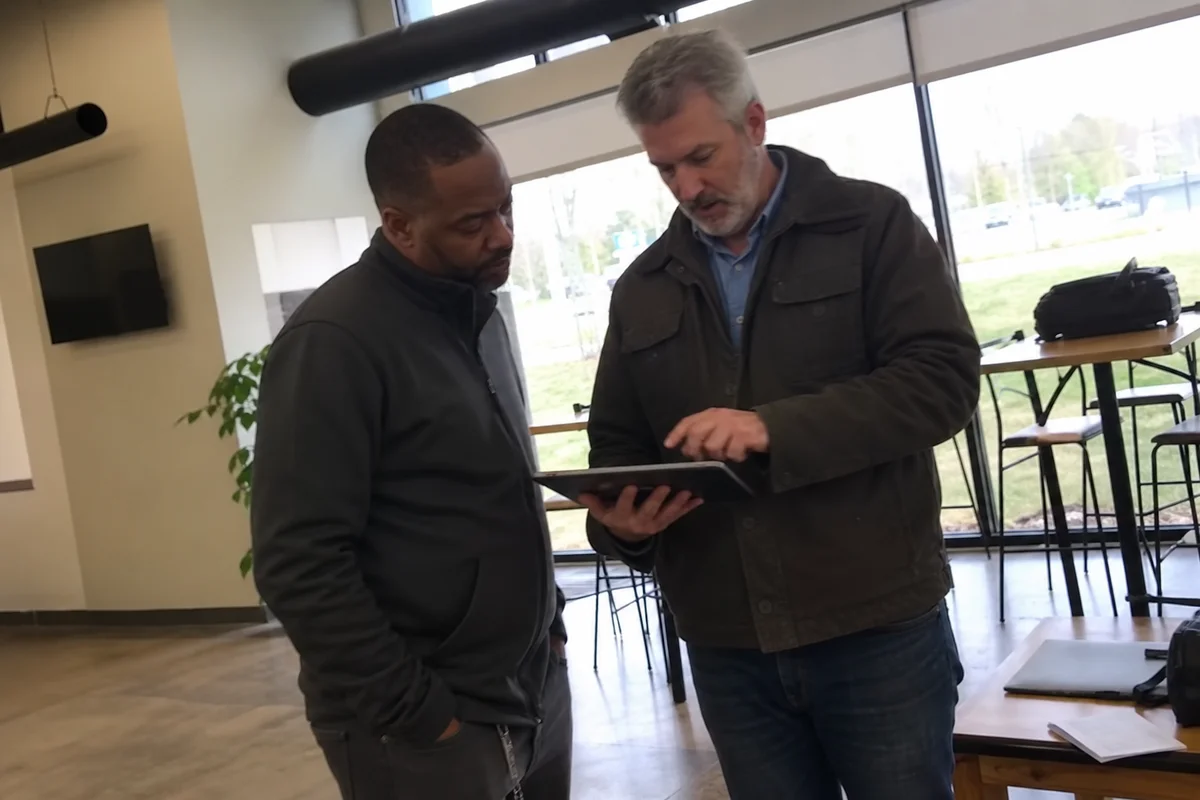
Business interruption (BI) coverage can be more valuable than physical property coverage on major losses. We provide the documentation your BI claim needs:
- Daily status logs connecting work to specific areas
- Timeline reasoning for restoration duration
- Photographic documentation of scope and progress
- Cost documentation aligned with insurance categories
- Certified professional testimony if disputes arise
The reopening decision
Deciding when to reopen (fully or partially) balances:
- Safety — is the space safe for staff and customers?
- Regulatory — do you meet health, safety, and permitting requirements?
- Aesthetics — are visible customer areas appropriate for reopening?
- Operations — do you have the systems needed to operate?
- Revenue — does partial reopening make financial sense?
We coordinate with you on this — it’s ultimately your decision, but we provide the information to support it.
Call us
For commercial restoration mitigation and business interruption minimization, call (720) 842-1950. For preventive planning with free Emergency Ready Plans, reach out here. Related: large-loss commercial restoration and Emergency Ready Plans.