
Learn
Sewage & Pathogen Cleanup Safety Standards
Pathogens in sewage and black water, how contamination spreads, containment and sanitization, disposal standards, and why DIY is unsafe.
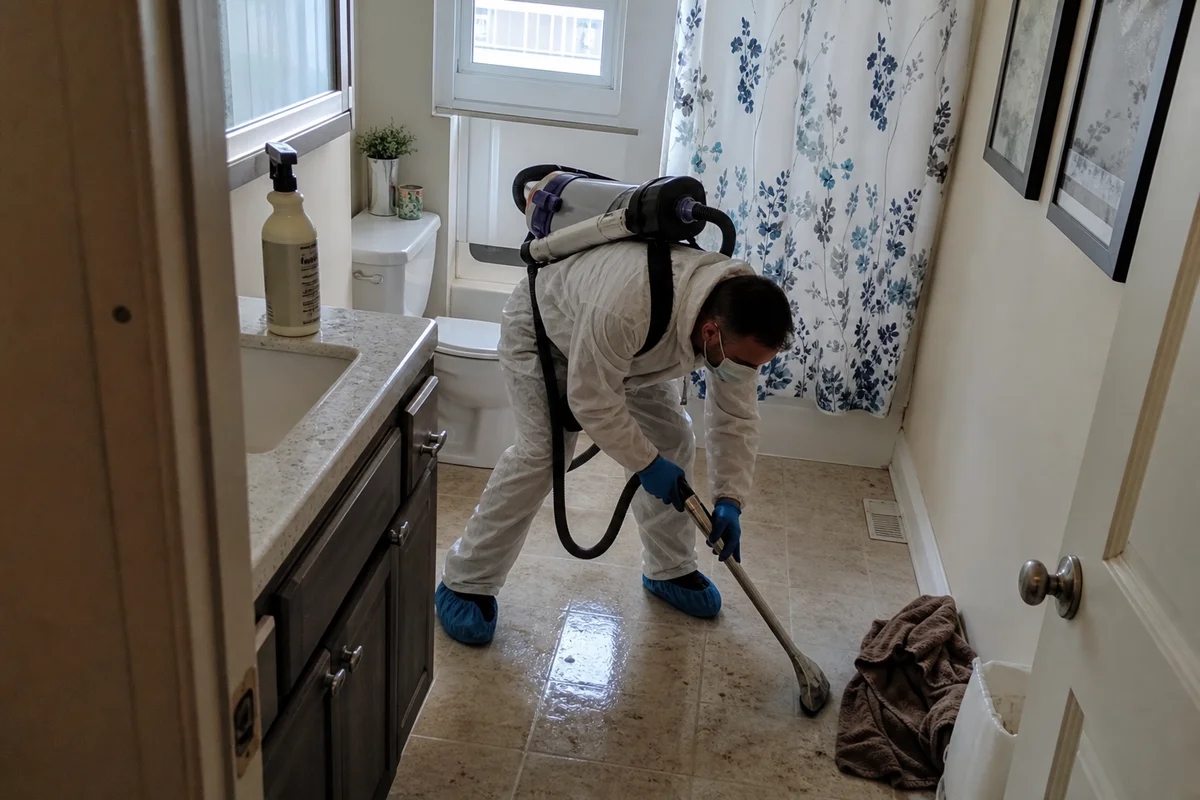
Sewage backup and pathogen contamination are Category 3 water events under the IICRC S500 standard — the highest contamination category. They’re not just messes to clean up; they’re biohazards with specific safety standards and required work practices.
Pathogens in sewage and black water
Sewage typically contains a mix of:
- Bacteria — E. coli, salmonella, campylobacter, shigella
- Viruses — hepatitis A, norovirus, rotavirus, enteroviruses
- Parasites — giardia, cryptosporidium, roundworms
- Chemical hazards — cleaning products, medications, industrial chemicals in some cases
Even small exposure can cause:
- Gastrointestinal illness (vomiting, diarrhea)
- Respiratory infection
- Skin infections through cuts or abrasions
- Serious infections in immunocompromised individuals
- Hepatitis A (transmissible through fecal-oral route)
How contamination spreads
Sewage spreads contamination in ways that aren’t intuitive:
- Foot traffic carries material through the home
- HVAC systems aerosolize particulate into every room with a return vent
- Splashing during cleanup creates airborne droplets
- Porous materials absorb pathogens that leach out for weeks
- Hidden voids (under floors, in walls) hold contamination indefinitely without professional cleaning
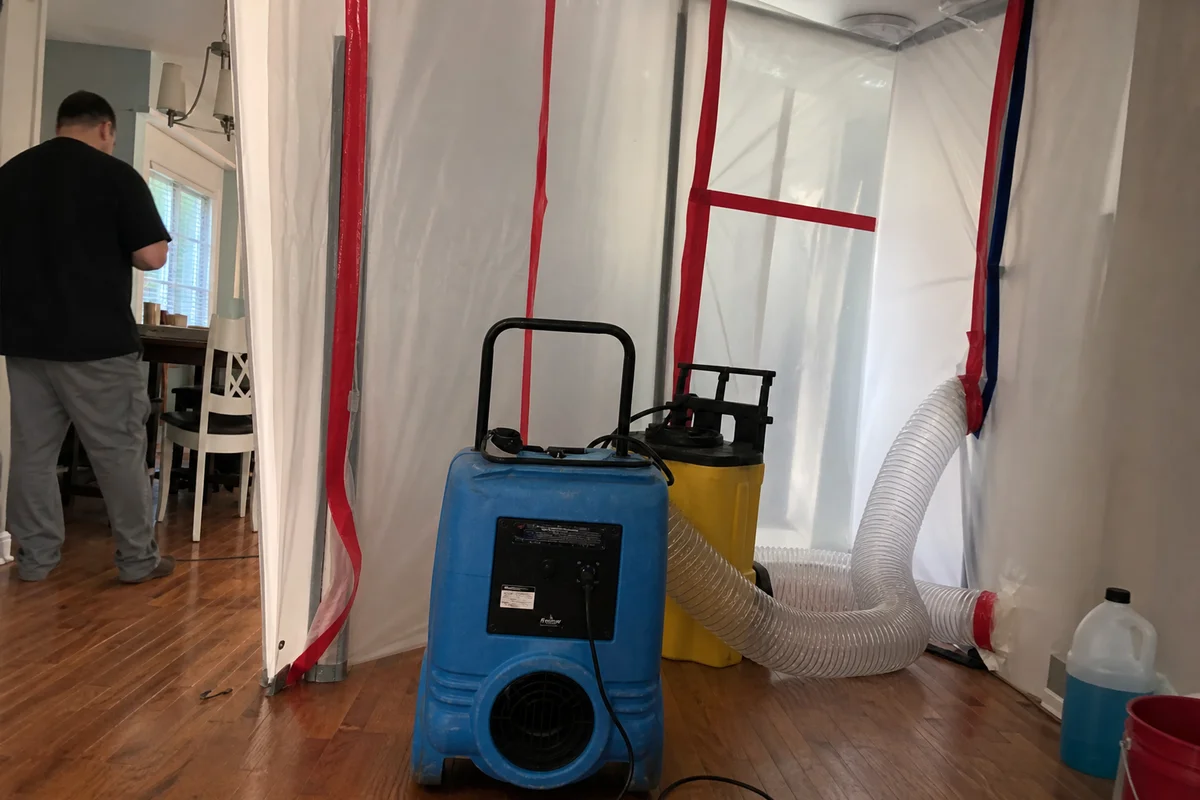
This is why containment is essential — not just to protect against visible contamination but against the invisible spread.
Our safety standards
Every biohazard technician works under strict protocols:
Pre-entry:
- Assessment of contamination extent and hazards
- Utility shutoffs for safety (electrical, water)
- Setup of decontamination station outside the affected area
PPE:
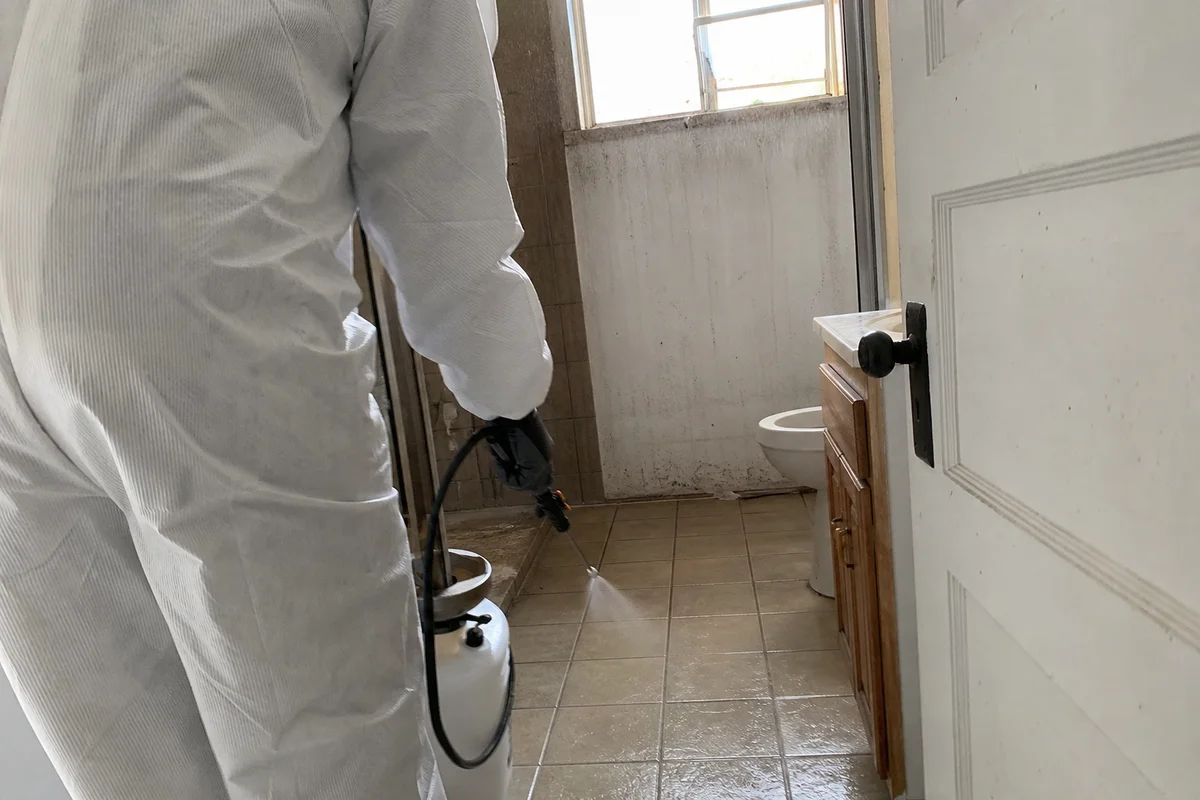
- Full Tyvek chemical suit
- Full-face respirator with P100 filters
- Chemical-resistant gloves (double-layer)
- Chemical-resistant boots with disposable covers
- Eye protection
During work:
- Containment with negative air pressure
- HEPA air scrubbing
- Wet methods to prevent aerosolization
- Regulated waste bagging inside containment
- No PPE removal until at decontamination station
Post-work:
- PPE disposal as biohazard waste
- Personal decontamination
- Site inspection and verification
Sanitization process
Step 1: Removal. Porous materials that contacted sewage come out. This typically includes carpet, pad, lower drywall, wet insulation, upholstered furniture, and anything else that can’t be safely decontaminated.
Step 2: Physical cleaning. Non-porous surfaces (concrete, framing, subfloor, tile) are cleaned with detergent to remove visible contamination.
Step 3: Disinfection. EPA-registered hospital-grade disinfectant with claims against the relevant pathogens is applied. Dwell time (5 to 10 minutes minimum, per label) is respected — no quick spray-and-wipe.
Step 4: Second application. In heavily contaminated areas, a second application after the first has dried.
Step 5: Structural drying. Standard extraction and drying to prevent secondary microbial growth.
Step 6: Post-cleaning verification. Visual inspection and, where warranted, ATP surface testing to confirm sanitation.
Disposal standards
Contaminated materials become regulated biohazard waste:
- Bagged in sealed red biohazard bags
- Labeled per OSHA and DOT requirements
- Placed in leak-proof secondary containment
- Transported by licensed hauler with DOT hazmat qualifications
- Disposed at licensed medical waste facility (incineration or autoclaving)
- Chain-of-custody documented and retained
Why DIY doesn’t meet the standard
Household cleaners (Lysol, bleach, common disinfectants) don’t have EPA registrations against sewage-specific pathogens at the concentrations and dwell times required. Household PPE (N95 mask, latex gloves) doesn’t protect against splash and inhalation risks. Home vacuum equipment isn’t designed for contaminated liquids and creates aerosolization risk.
Beyond the safety issues, DIY doesn’t produce documentation. If there’s ever a health issue, insurance dispute, or real estate transaction, the “I cleaned it myself” answer creates significant liability.
When it’s an emergency
Call immediately if:
- Active sewage backup is occurring
- Contamination is spreading toward other areas
- Anyone in the home is showing symptoms of exposure
- The property is unsafe to occupy
Everyone should leave the affected area — children, pets, elderly, immunocompromised especially — and not return until sanitization is complete.
Our response
Call (720) 842-1950 24/7. A crew is dispatched immediately for Category 3 emergencies. We handle:
- Immediate safety setup and containment
- Extraction and physical cleaning
- Sanitization with EPA-registered disinfectants
- Removal and disposal of regulated waste
- Structural drying
- Post-cleaning verification
- Documentation for insurance
This is core biohazard and crime scene cleanup work. Related: sewage backup and black water cleanup and what biohazard cleanup covers.