
Decision Guide
What to Expect During a Biohazard Cleanup
Discreet arrival, assessment, containment and cleaning steps, deodorization, timeline, and insurance handling for a sensitive cleanup.
Biohazard cleanup is one of the hardest calls we take, and often one of the most sensitive. Families going through trauma, loss, or a devastating event don’t need spectacle — they need calm, competent professionals who handle the work with respect. Here’s what to expect from the first call.
The initial call
You call (720) 842-1950. A live dispatcher answers 24/7. We ask a few essential questions:
- What happened
- Where the location is
- Whether there are ongoing safety concerns
- Whether law enforcement or coroners are involved
- What kind of response timing you need
We don’t push, and we don’t require details you’re not ready to share. Just enough to dispatch the right crew.
Discreet arrival
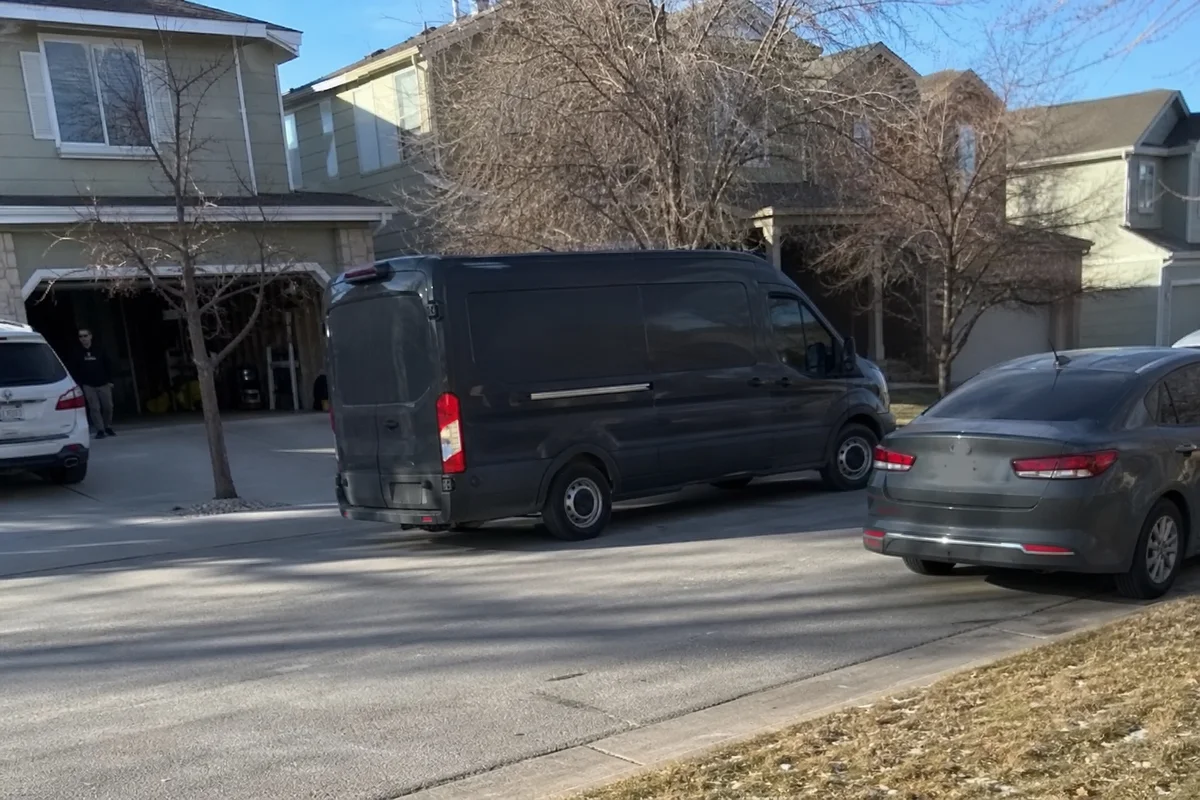
Our biohazard crews arrive in unmarked vehicles. No logos, no company markings. Neighbors won’t know what’s happening. Team members wear neutral clothing until they gear up on-site.
We coordinate arrival timing with you — sometimes middle-of-the-night is best; sometimes after neighbors are at work is better. Your privacy takes priority.
Assessment
The lead technician does a walkthrough with you (or without you if you’d rather not be present). We assess:
- Extent of contamination
- Materials affected
- Structural or safety concerns
- Salvage vs disposal decisions
- Timeline estimate
Based on assessment, we provide:
- Written scope of work
- Estimated timeline
- Estimated cost
- Insurance guidance
You review, ask questions, and give the go-ahead when you’re ready.
Containment and setup
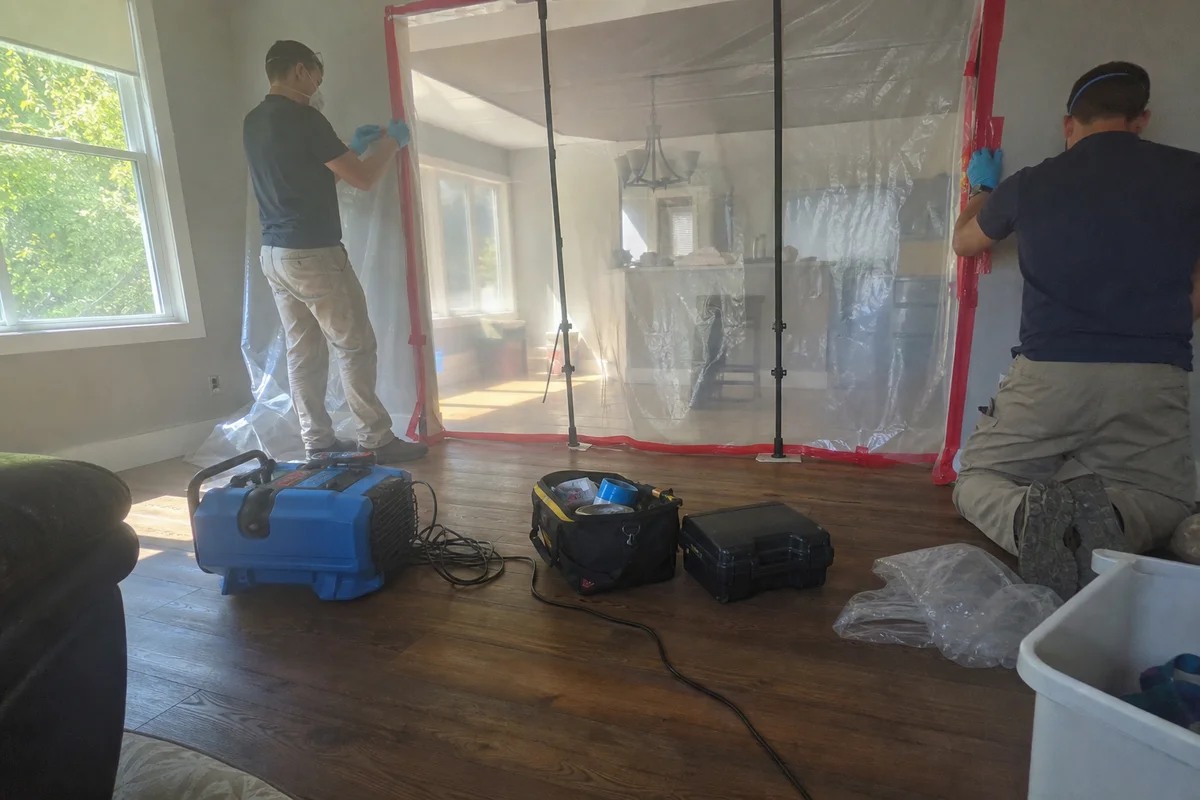
Containment barriers are set up to isolate the affected area. HEPA air scrubbers begin running to control airborne contamination. Crews suit up in full PPE outside the affected area.
Setup usually takes 30 minutes to an hour, depending on scope.
Cleaning phase
Actual cleaning follows the process we detailed in our sewage and pathogen safety standards guide:
- Removal of contaminated porous materials
- Physical cleaning of remaining surfaces
- Application of EPA-registered hospital-grade disinfectants
- Multiple applications where warranted
- Deep cleaning of hidden or hard-to-reach areas
Deodorization
Sewage, trauma, and decomposition all leave odors that can persist for weeks or months without proper deodorization. We use:
- Ozone treatment in unoccupied areas
- Thermal fogging for penetration into porous surfaces
- Sealing for surfaces where residue can’t be fully removed
- HVAC cleaning where the system was affected
Timeline expectations
- Small residential trauma: 4 to 8 hours
- Unattended death (residential): 6 to 24 hours depending on scope
- Sewage backup (residential): 4 to 12 hours for basic scope, longer for extensive
- Commercial biohazard: 8 hours to several days depending on scale
We give you a clear timeline at assessment and update you throughout.
Family conversation
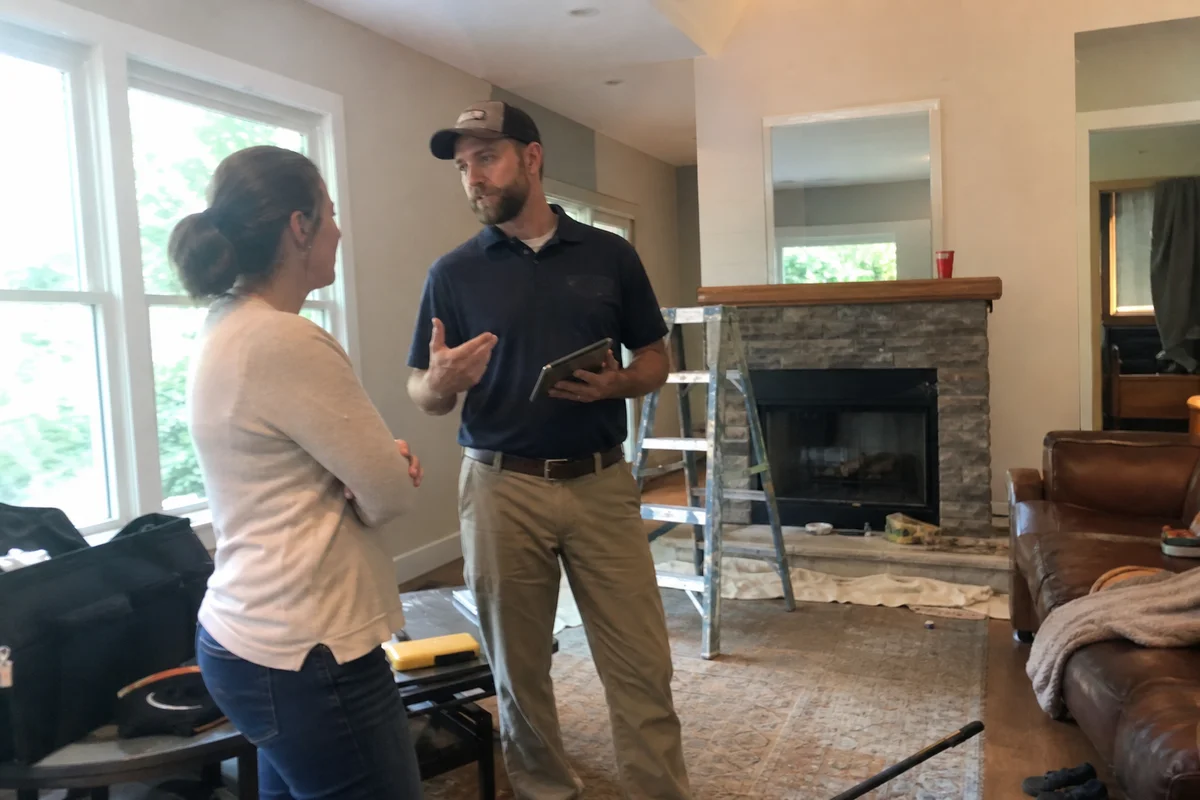
Our project manager stays available throughout the work. If you have questions, concerns, or difficult decisions to make (about contents, items to preserve, timeline), we’re there. This isn’t just a job — it’s a service to a family in a hard moment.
Insurance handling
Most homeowners policies cover biohazard cleanup for:
- Trauma from crime
- Sudden events (accidents, injury)
- Some vandalism
We help you:
- Document the incident properly
- File with your insurance carrier
- Provide claim-ready scope and pricing
- Bill your carrier directly when possible
For crime victims, Colorado’s Victim Compensation Program may cover cleanup costs. We help navigate that process too.
Completion
When work is complete:
- Final walkthrough with you
- Documentation package (photos, scope, disposal records)
- Any preserved items returned properly
- Recommendations for anything outside our scope (repair, reconstruction)
- Chain-of-custody records for regulated waste
We close discreetly, just as we arrived.
Support beyond cleanup
We know this isn’t just about restoration. If you need referrals for grief support, victim services, mental health resources, or trauma-informed support groups in the Douglas County area, we can point you to them. This is a small community, and we’ve built those relationships over years.
Call us
If you’re facing a situation that calls for biohazard and crime scene cleanup, call (720) 842-1950 any hour. We answer with compassion and dispatch with respect. Related: what biohazard cleanup covers and sewage and pathogen safety standards.