
Decision Guide
Filing a Fire Damage Insurance Claim in Colorado
Claim steps and documentation, additional living expenses, the deductible-only model, and working with your adjuster to avoid pitfalls.
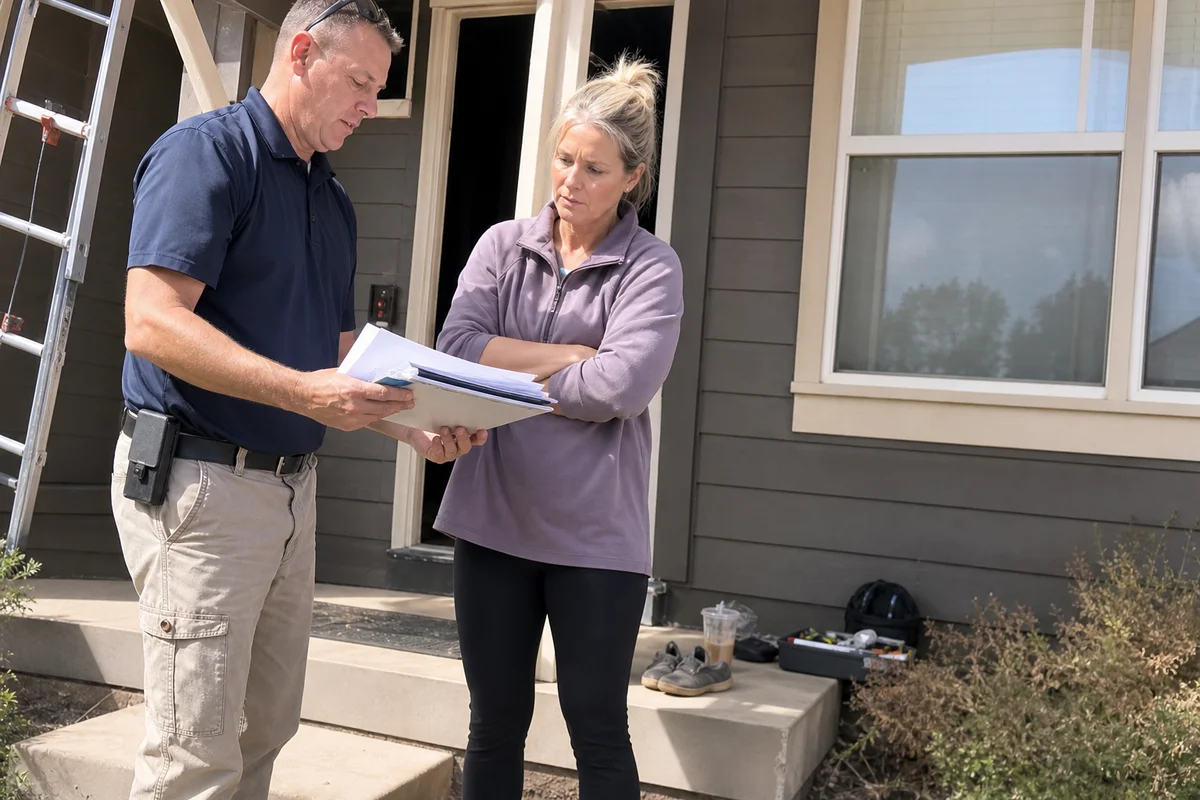
Fire claims are among the most complex homeowners insurance claims. Big scope, ALE decisions, contents inventories, adjuster negotiations, and often months of work. Here’s how to run the process well.
Report promptly
Call your insurance carrier as soon as the immediate emergency is under control. Provide:
- Policy number
- Date and rough time of the fire
- Brief description of what happened
- Contact info for follow-up
The carrier assigns a claim number and (usually) an adjuster. You’ll get a callback within 24 to 48 hours. Meanwhile, secure the property and start documentation.
Document everything
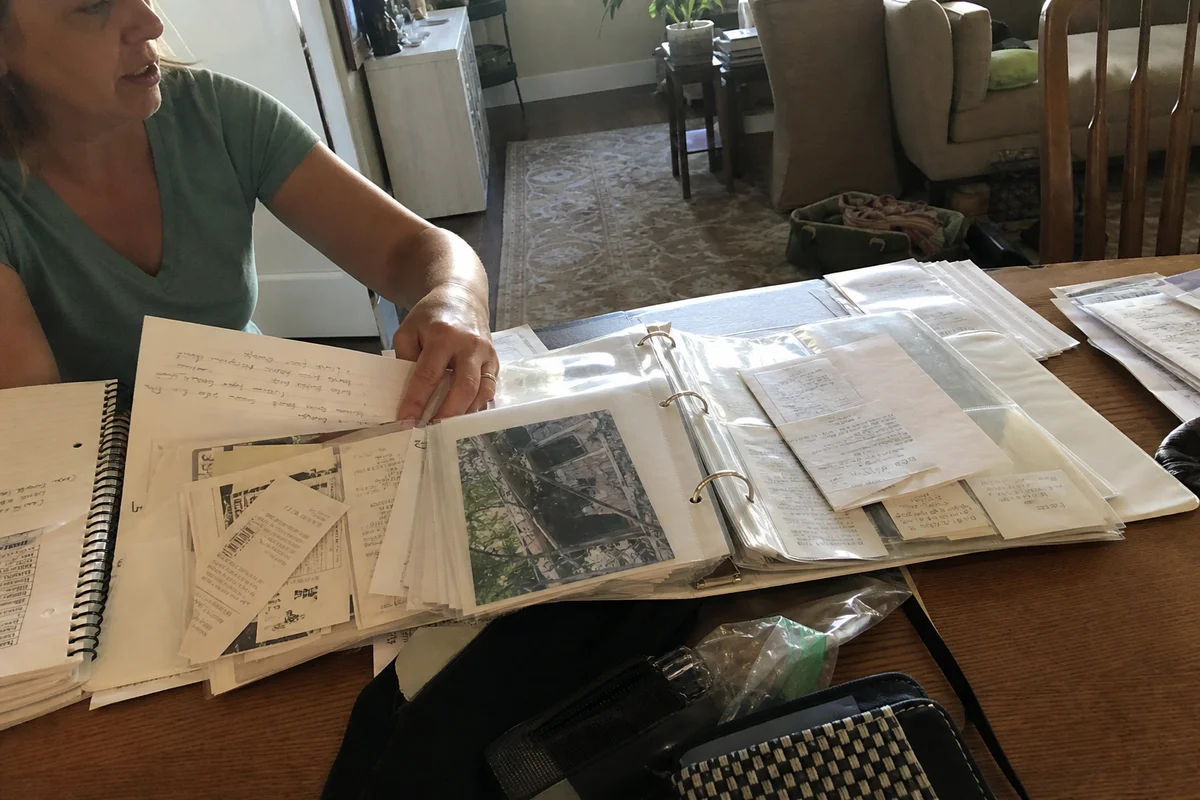
Photos and video are your best friend:
- Exterior: every side, roof, windows, doors
- Interior: every room, wide shots and close-ups
- Damaged contents: individual items, especially high-value
- The origin area: fire origin, spread pattern, water damage from firefighting
Written inventory of damaged contents. High-value items (jewelry, electronics, art) documented separately with any purchase receipts you can find.
Receipts for everything you spend post-fire:
- Hotel and temporary housing
- Meals above your normal grocery
- Replacement clothing and essential items
- Laundry
- Pet boarding if applicable
Additional Living Expenses (ALE)
If your home is uninhabitable, ALE covers the cost of temporary living — hotel, rental, meals above baseline. Save every receipt. ALE has a coverage limit (often 20 to 40 percent of your dwelling coverage, but check your policy). It runs until your home is restored or the limit is reached.
Practical tips:
- Stay somewhere reasonable — not the most expensive hotel in town
- Keep receipts and a running log
- Report ALE weekly to your adjuster
- If you’re displaced long-term, transition to a rental (often more economical than hotel)
The mitigation duty
Your policy requires you to mitigate — take reasonable steps to prevent further damage. This means:
- Securing the property (board-up, tarping)
- Preventing water intrusion after firefighting
- Getting a restoration company on-site quickly
Failure to mitigate can reduce or void coverage. Fortunately, mitigation costs are also covered — you don’t pay out of pocket for them.
The Xactimate scope
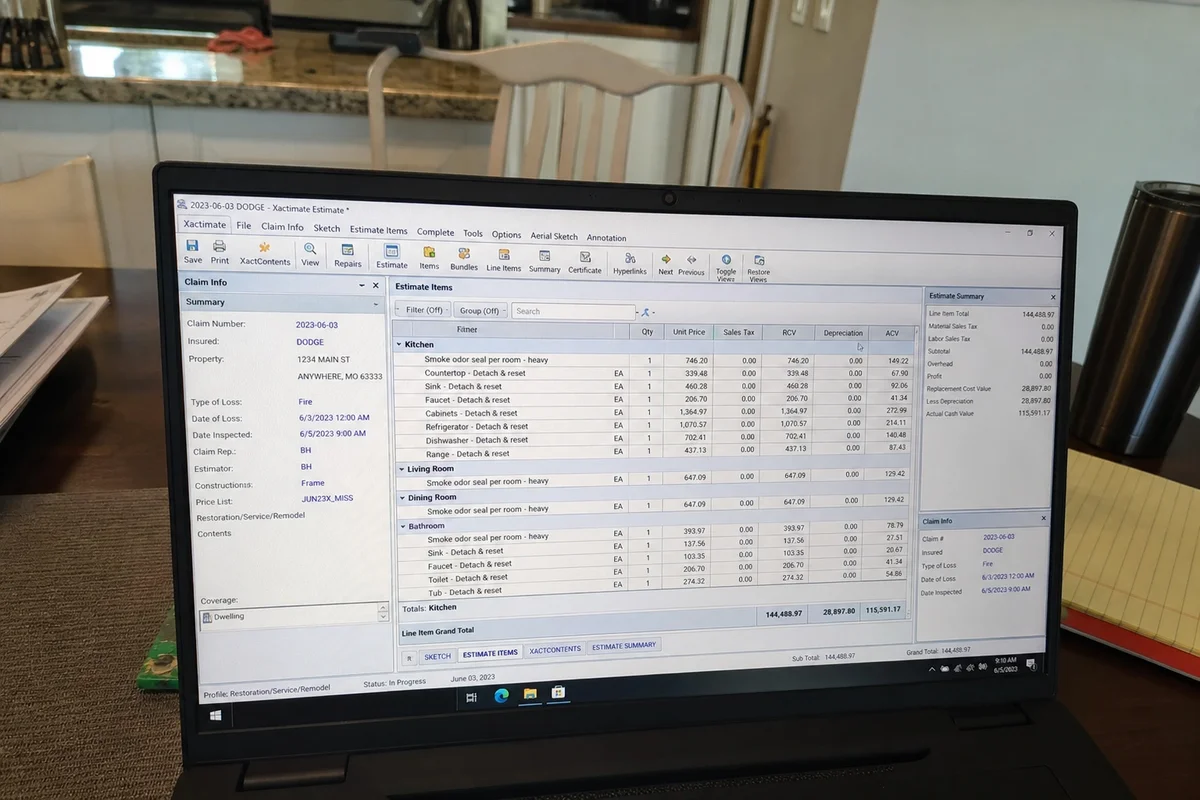
Almost all restoration and insurance work uses Xactimate — the industry-standard estimating software. It generates line-item scope with local pricing (based on your ZIP code). Adjusters use it, restoration companies use it, and it’s the language of the claim.
We write Xactimate scope for every job. Your adjuster gets a scope in the format they trust, with pricing they know is standard. That eliminates 90% of the “why is this priced this way?” back-and-forth.
Working with your adjuster
- Be responsive. Return calls and emails promptly.
- Provide requested documents fast. Delay in your response causes delay in approval.
- Let your restoration company coordinate directly. Adjuster-to-contractor conversations resolve technical questions faster than adjuster-to-you-to-contractor.
- Understand your policy. Ask questions upfront rather than assuming.
- Get scope approval before major work. Emergency mitigation happens immediately; large reconstruction waits for approval.
Common claim pitfalls
- Under-documenting contents. Adjusters can’t approve what they can’t see. Photograph and inventory everything.
- Signing anything you don’t understand. If a contractor asks you to sign an Assignment of Benefits (AOB) or a broad authorization, read carefully. Ask your adjuster about it first.
- Cash settlements from unlicensed contractors. Some post-fire “storm chaser” contractors offer low bids and cash payment. This usually shortcuts insurance and leaves you exposed.
- Missing deadlines. Policies have proof-of-loss deadlines (often 60 days). Meet them.
- Assuming everything is covered. Some things aren’t — extra-value items over sub-limits, certain fine art or jewelry, custom features not disclosed. Read your policy.
The deductible-only model
For most covered fire losses, you pay your deductible and the carrier pays the rest. Our owner is a CPA; we handle Xactimate scoping, adjuster coordination, subrogation, and direct billing to the carrier. Deductible-only is the norm for our clients.
Total loss scenarios
If damage is extensive enough that repair costs would exceed replacement value (or exceed your dwelling coverage limit), the carrier may declare a total loss. In this case they typically pay policy limits and settle the loss. This is complex — get a public adjuster or attorney’s advice if you’re in this situation.
Call us
Fire claims are stressful. We handle the fire and smoke damage restoration and the claim coordination so you can focus on your family. Call (720) 842-1950 or request a free inspection. Related: what to do immediately after a house fire and restore or replace decision guide.