
Learn
Removing Smoke Odor After a Fire
Why smoke odor lingers and how pros remove it — ozone vs thermal fogging vs hydroxyl, sealing porous surfaces, and HVAC deodorization.
Smoke odor is the most stubborn part of fire damage. Long after visible soot is cleaned and reconstruction is complete, odor can persist for months if it’s not addressed correctly. Here’s what actually works — and what doesn’t.
Why smoke odor lingers
Smoke residue is a mix of particulate, VOCs, and semi-volatile organic compounds that embed in porous materials. Every time temperature or humidity changes, these compounds off-gas, releasing odor into the air. Materials most likely to hold odor:
- Drywall and plaster — porous, absorbent
- Wood cabinets, framing, and trim — absorb odor into finish and grain
- Insulation — a sponge for both particulate and VOCs
- HVAC internal insulation — often the biggest hidden source
- Textiles — carpet, curtains, upholstery, clothing
- Duct interior surfaces — even after wipe-down
Cleaning surfaces alone doesn’t fix the problem. You have to address the residue at the source and deodorize what remains.
The deodorization methods
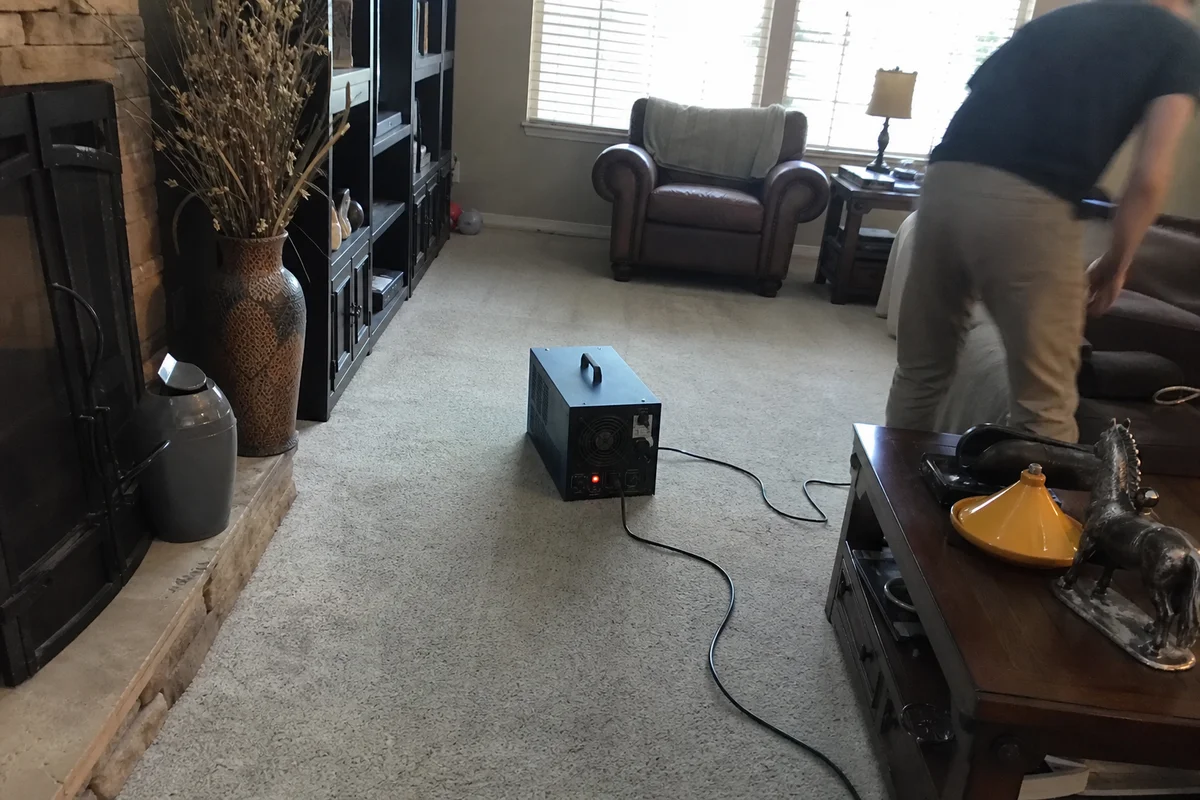
Ozone treatment. An ozone generator produces O₃, which reacts chemically with odor molecules to break them down. Highly effective on hard surfaces and in empty spaces. Requires the space to be vacated during treatment (ozone irritates lungs) and ventilated afterward. Best for post-cleaning treatment of an unoccupied home.
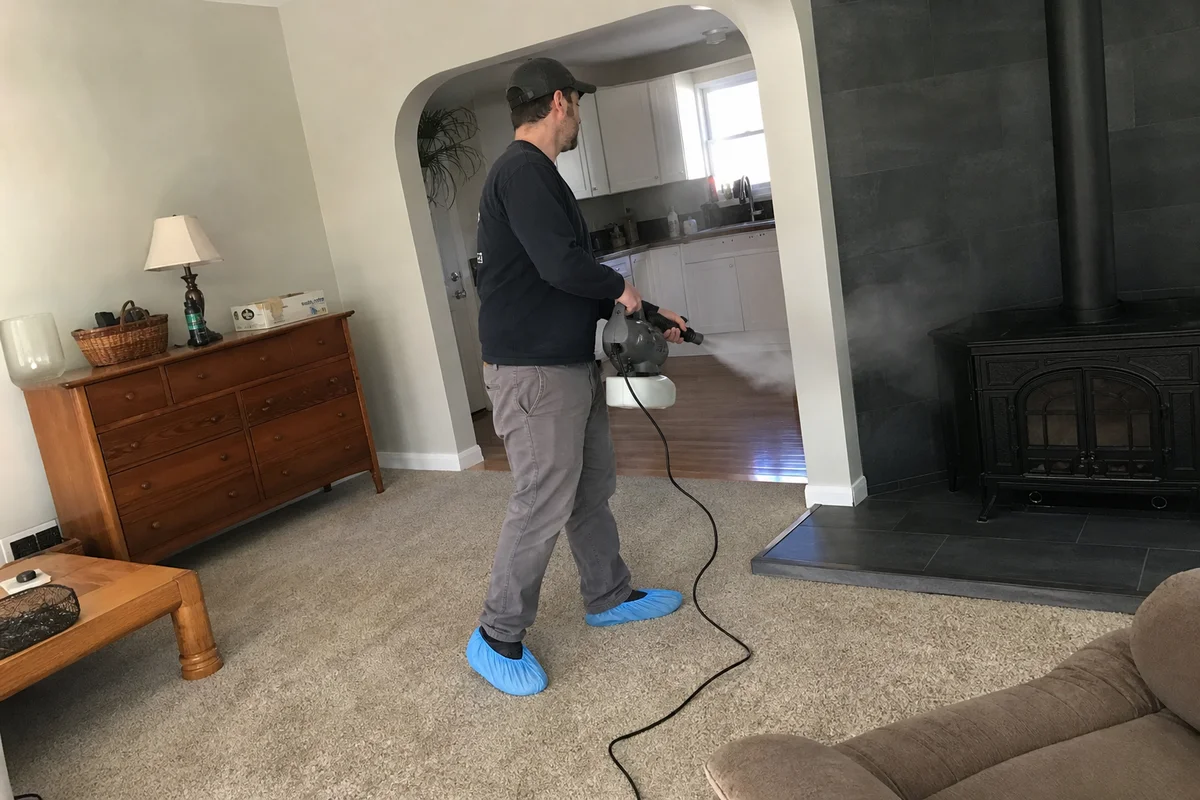
Thermal fogging. A heated deodorizer is fogged into the space, mimicking smoke’s original migration path — penetrating cracks, cavities, and surface pores where smoke went. The deodorizer neutralizes odor molecules directly.
Hydroxyl generators. Produce hydroxyl radicals that neutralize odor and can be run in occupied spaces. Slower than ozone but safer for use during ongoing restoration work.
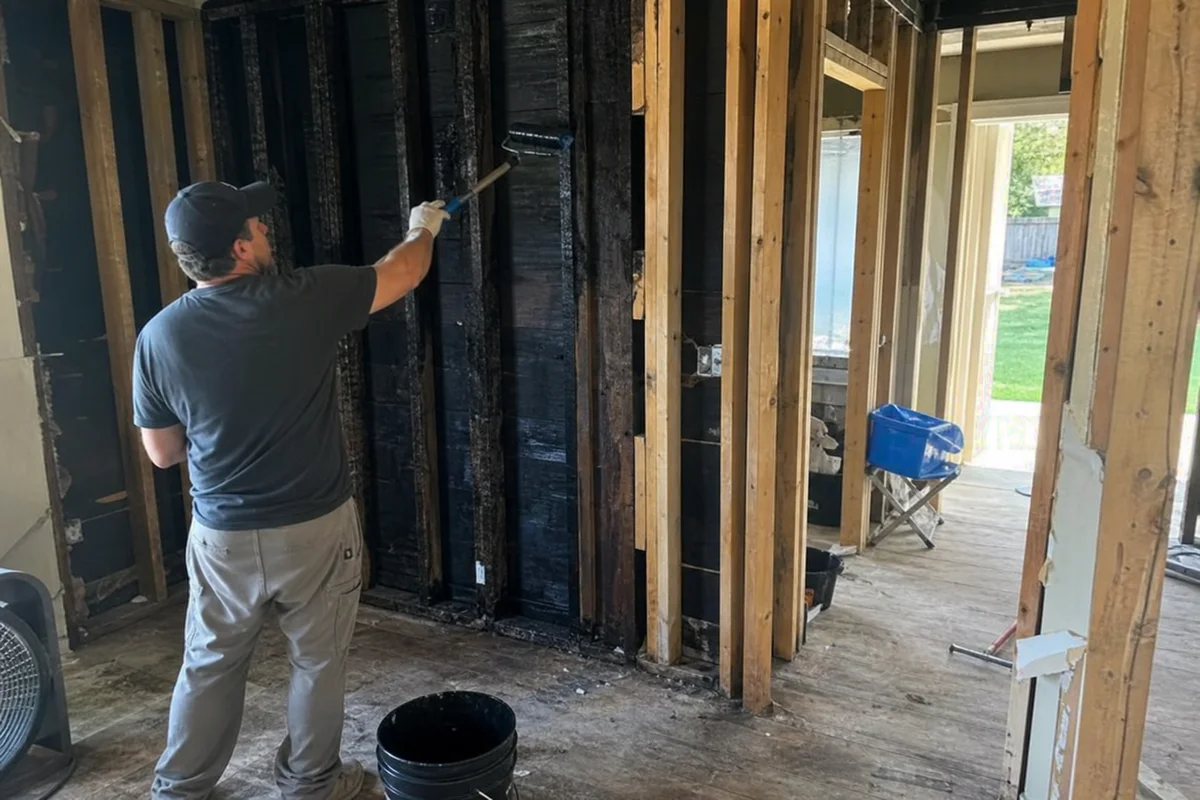
Sealing. For porous surfaces where residue cannot be fully extracted (charred framing, ceiling substrate, deeply-affected drywall to be re-painted), an odor-blocking sealer traps residue and prevents off-gassing.
HVAC deodorization. Ductwork is cleaned, then treated with antimicrobial and deodorizer, then re-tested. Skipping this step means every furnace cycle keeps redistributing odor.
When we use which method
- After cleaning, before reconstruction: ozone (for hard-surface residue) plus sealing (for materials staying in place)
- During ongoing occupied work: hydroxyl generators
- Whole-house post-restoration: thermal fogging plus HVAC treatment
- Textiles: ozone chamber at our facility, or off-site cleaning
What doesn’t work
- Air fresheners — mask only, no source removal
- Vinegar bowls, baking soda, coffee grounds — folk remedies, negligible effect on serious smoke damage
- Fans and open windows alone — temporary reduction, doesn’t remove residue
- HVAC filter changes without duct cleaning — new filters catch new particulate; existing residue in ducts stays
- Painting over without sealing first — paint traps residue temporarily but odor comes through within weeks
The professional sequence
- Source removal — soot, char, damaged materials
- Deep cleaning — surface-by-surface, matched to soot type
- Sealing — where residue can’t be fully removed
- HVAC decontamination — ducts, coil, blower
- Whole-house deodorization — ozone or thermal fog after cleaning
- Textile treatment — off-site cleaning for clothing, curtains, upholstery
- Verification — post-treatment air testing where warranted
Read our how smoke and soot damage spreads guide for the underlying migration mechanics and air duct cleaning service page for HVAC scope.
Call us
Smoke odor is a technical problem with technical solutions, and a core part of fire and smoke damage restoration. If you’re smelling something months after a fire, it means source residue is still present and deodorization was incomplete. Call (720) 842-1950 for an assessment — often we can identify the source in a single walkthrough.