
Learn
How Smoke and Soot Damage Spreads Through a Home
Smoke travels through HVAC and wall cavities long after the fire. Soot types, corrosive residue timelines, and the materials most affected.
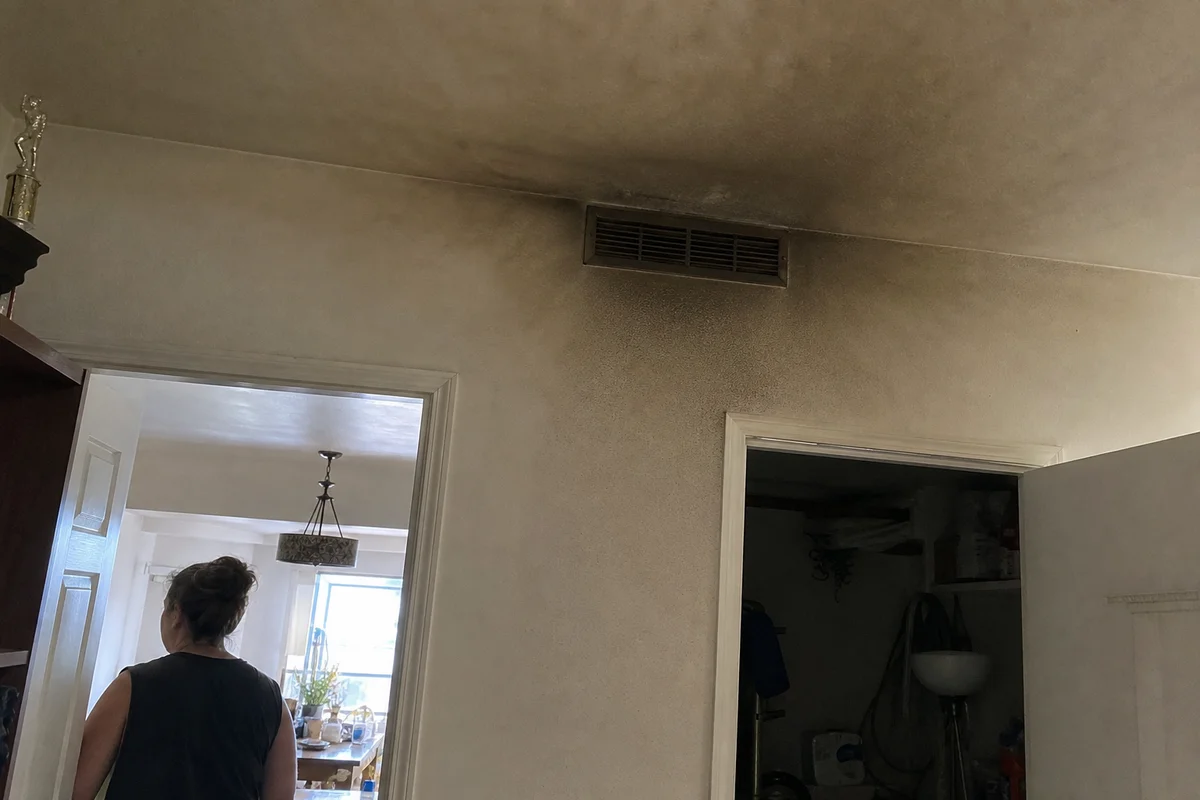
House fires cause immediate flame and heat damage in a defined area. Smoke and soot damage is entirely different — it can spread throughout the home, affecting rooms that never saw flames. Understanding how it moves is why professional fire restoration goes far beyond the burned area.
The three types of soot
Dry soot comes from high-heat, fast-burning fires (paper, wood). Fine particulate, easier to remove with dry methods, doesn’t smear as readily.
Wet soot comes from low-heat, smoldering fires (synthetics, plastics). Sticky, oily residue that smears easily. Requires specialized cleaning agents.
Protein soot comes from kitchen fires involving food, cooking oils, and meats. Nearly invisible but has strong lingering odor. Often the hardest type to identify and clean because homeowners assume the visible fire damage is the whole story.
Different soots need different cleaning methods. Applying the wrong technique — for example, wet cleaning wet soot — makes the damage worse.
How smoke moves through a home
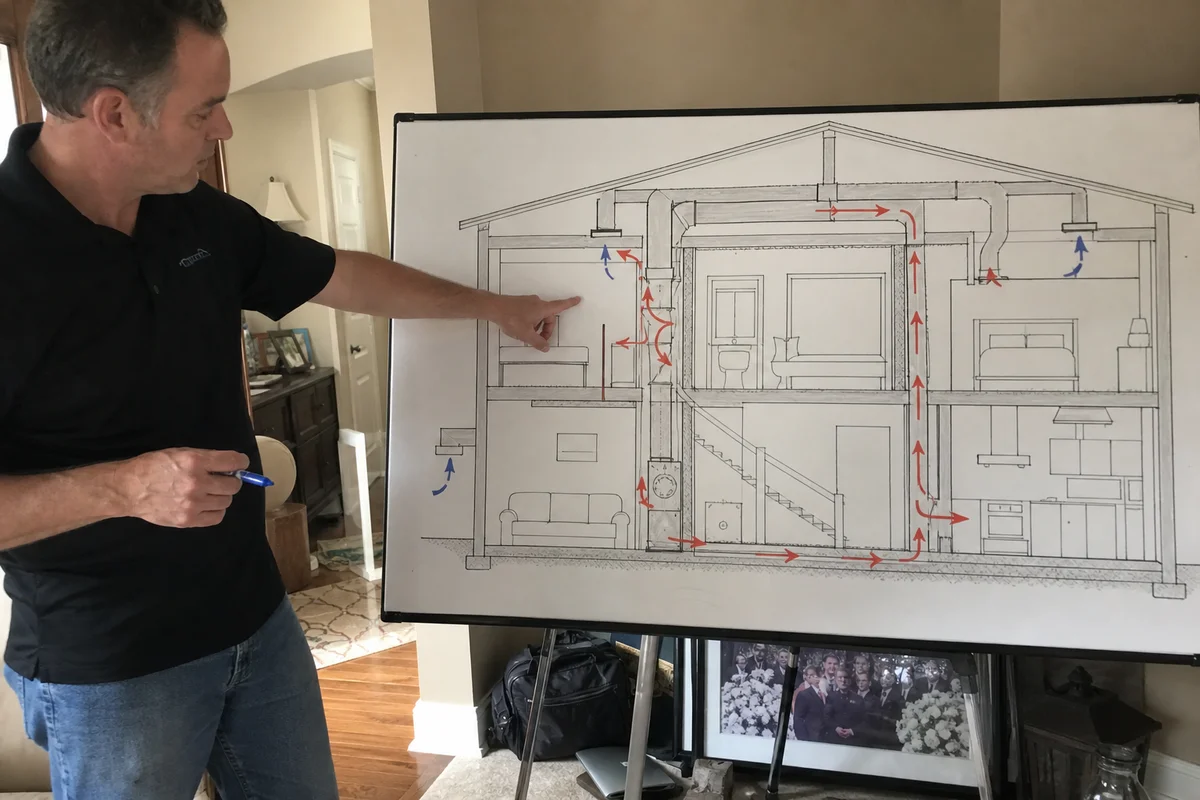
Smoke follows the paths of least resistance:
- HVAC systems. Return vents pull smoke in and distribute it through every duct in the house. This is the #1 spread mechanism.
- Wall cavities. Smoke moves through electrical penetrations, plumbing chases, and unsealed openings between floors.
- Convection. Hot air rises. Smoke accumulates on upper floors and near ceilings even far from the fire.
- Cool surfaces. Smoke condenses on cold surfaces (exterior walls, unheated areas). This is why residue often appears heaviest in unexpected spots.
- Textiles. Curtains, carpet, upholstery, clothing all absorb odor and become secondary sources.
By the time you smell smoke in a room, residue has usually been depositing there for hours.
The corrosive residue timeline
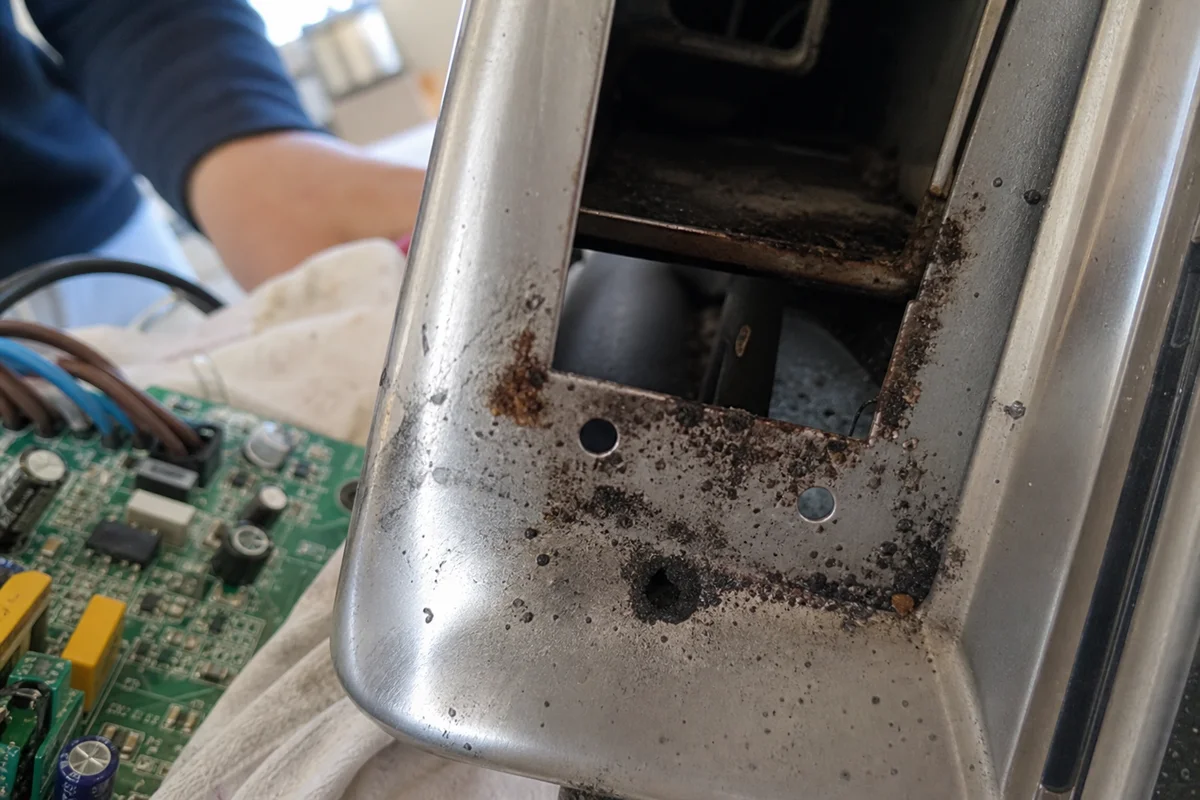
Fire residues are acidic. Combined with humidity, they attack:
- Within hours: electronics corrode as fine particulate settles on circuits
- Within days: metal fixtures, appliances, and hardware discolor and etch
- Within a week: finished wood, marble, and stone can be permanently stained
- Within weeks: grout, paint, and plaster absorb residue and hold odor indefinitely
This is why fast mitigation matters. A fire response at hour 4 saves materials that a response at hour 96 cannot.
The HVAC problem
Every time your HVAC runs after a fire, it pulls smoke and soot through the system and redistributes it. Fresh residue settles on already-cleaned surfaces. This is why we insist on:
- Shutting off HVAC as soon as the fire is out
- Covering vents until the system can be professionally cleaned
- Full HVAC decontamination before restoration is considered complete
See our air duct and HVAC cleaning service page and cleaning soot off walls, contents, and HVAC guide.
Materials most affected
- Painted walls and ceilings — absorb residue
- Fabric and upholstery — absorb odor and residue simultaneously
- Electronics — corrosion damage from fine particulate
- Metal fixtures — discoloration and etching
- Wood cabinets and trim — absorb odor into finish
- Textiles and clothing — often need off-site cleaning
- HVAC systems — contamination source that keeps redistributing
Why professional cleaning matters
The scope of smoke damage almost always exceeds what’s visible. Our fire restoration process addresses:
- Every room the smoke reached, not just the fire origin
- Dry-first cleaning appropriate to soot type
- HVAC decontamination as a full step, not an afterthought
- Odor neutralization at the source (residue removal) plus deodorization (ozone, thermal fogging)
- Sealing porous surfaces where residue can’t be fully extracted
Read our smoke odor removal guide for the deodorization methods that actually work.
Call us
If you’ve had a fire — even a small one — the smoke damage is probably worse than it looks. Call (720) 842-1950 for a free fire and smoke damage restoration assessment. Fast response is the single biggest factor in minimizing permanent damage.