
Learn
Is Black Mold Dangerous? Health Risks Explained
Black mold (Stachybotrys) can trigger respiratory issues, especially for at-risk groups. Symptoms, when it's urgent, and why testing matters.
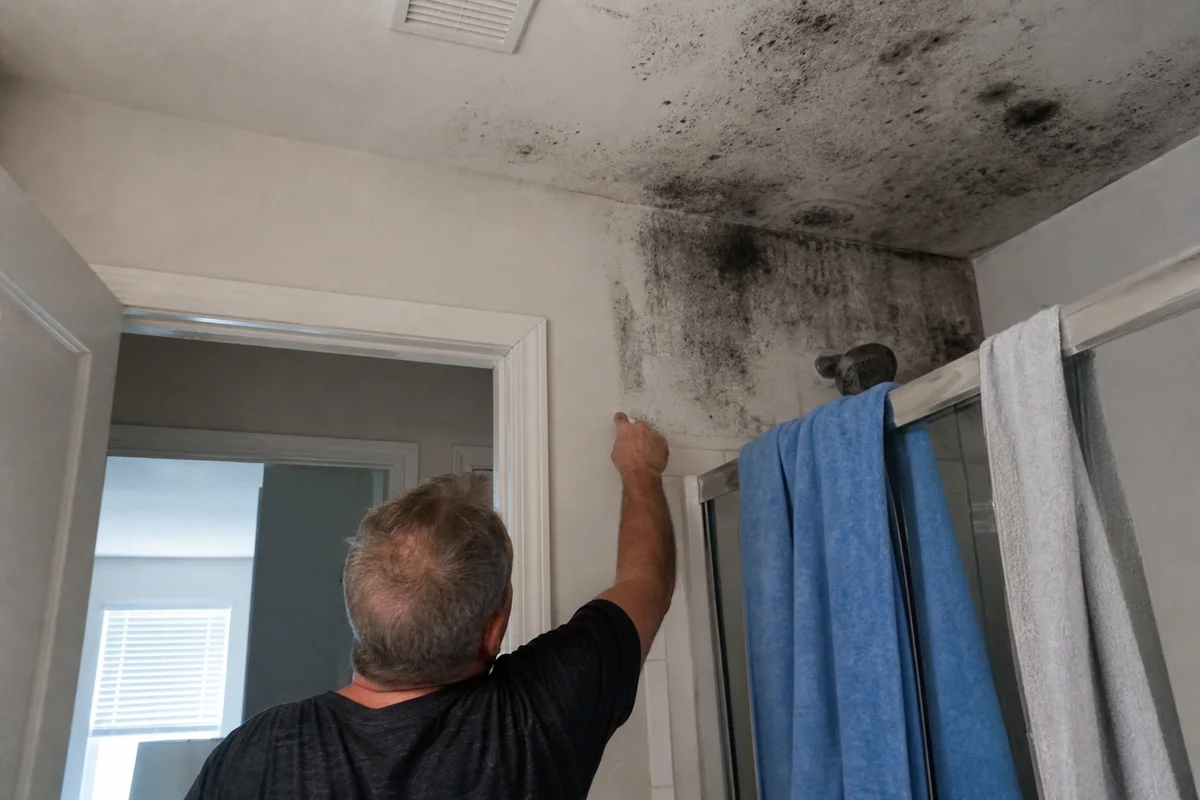
Black mold is one of the top health-anxiety searches for a reason. When a homeowner finds dark spots spreading across a bathroom wall or basement corner, the immediate question is: is this dangerous?
The short answer: it can be. The longer answer requires understanding what “black mold” actually means, who’s at risk, and when it’s genuinely urgent.
What “black mold” actually means
In popular usage, “black mold” often refers to Stachybotrys chartarum — a specific species with well-documented respiratory effects. But many black-colored molds exist, most of which are common environmental species with limited health risk to healthy adults.
You can’t tell the difference by looking. Color, texture, and location all vary. Only laboratory testing (air sampling or surface sampling) can identify the species.
Symptoms of mold exposure
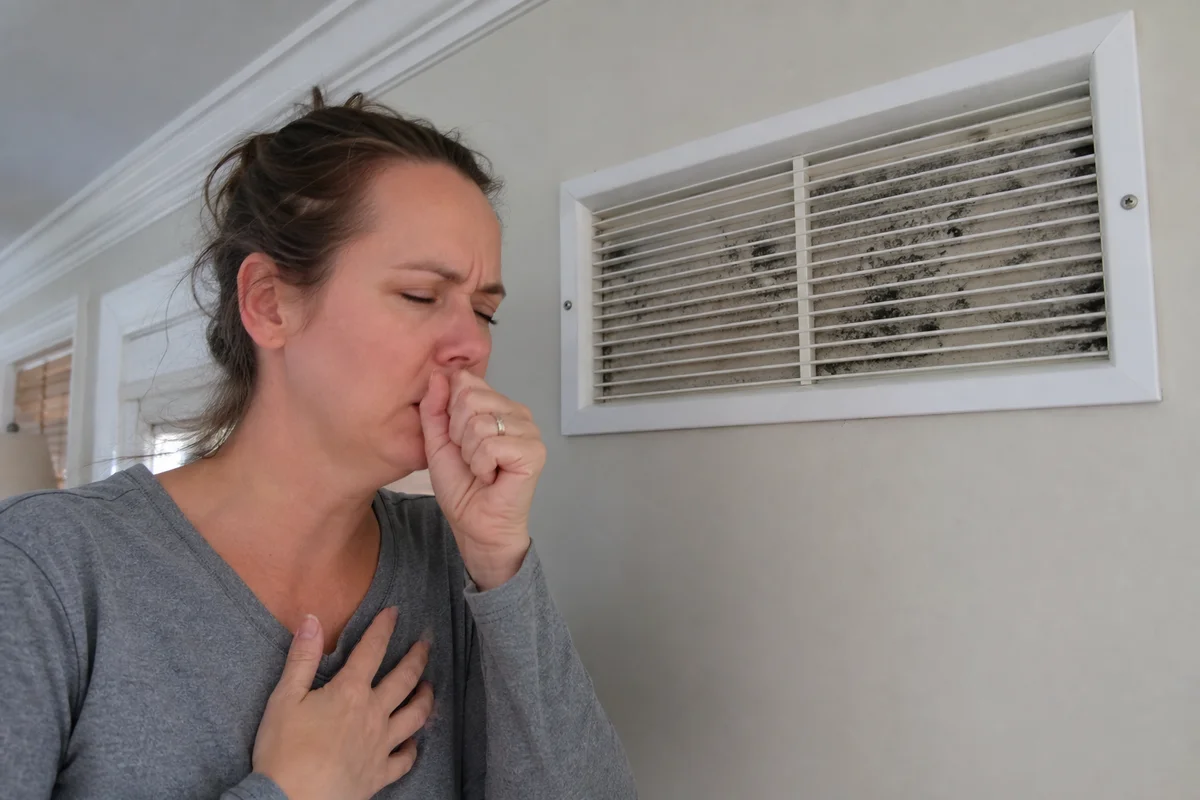
Common symptoms in exposed individuals:
- Coughing, wheezing, chest tightness
- Nasal congestion, sinusitis, sneezing
- Eye irritation, watery eyes
- Skin irritation or rash
- Headache, fatigue
- Asthma exacerbation in people with existing asthma
More serious effects (in sensitive individuals):
- Difficulty breathing
- Fungal infections in immunocompromised people
- Hypersensitivity pneumonitis (rare)
Not everyone reacts. Some people live with mold for years without symptoms; others develop severe reactions within days of exposure. Individual sensitivity varies.
Who’s most at risk
- Children — developing respiratory systems, closer to floor-level dust
- Elderly — often diminished lung capacity
- People with asthma or COPD — mold triggers exacerbations
- People with allergies — mold spore allergy is common
- Immunocompromised individuals — cancer patients, organ transplant recipients, autoimmune conditions
- Pregnant people — some evidence of pregnancy effects, though data is limited
- Infants — high sensitivity to airborne contaminants
If any of these describe someone in your home, mold isn’t something to sit on.
When it’s urgent
Get professional help immediately if:
- Visible mold covers more than 10 square feet
- Mold is behind walls, in HVAC, or in areas you can’t easily assess
- Anyone in the home has active respiratory symptoms
- The mold followed a water event (higher likelihood of active growth)
- You’re in a high-risk group (see above)
- Mold has a strong musty odor
Less urgent (but still address):
- Small surface patches (under 10 sq ft) with no ventilation contact
- Mold on hard, easily-cleaned surfaces (tile, grout, glass)
- No sensitive residents in the home
Testing: when it matters
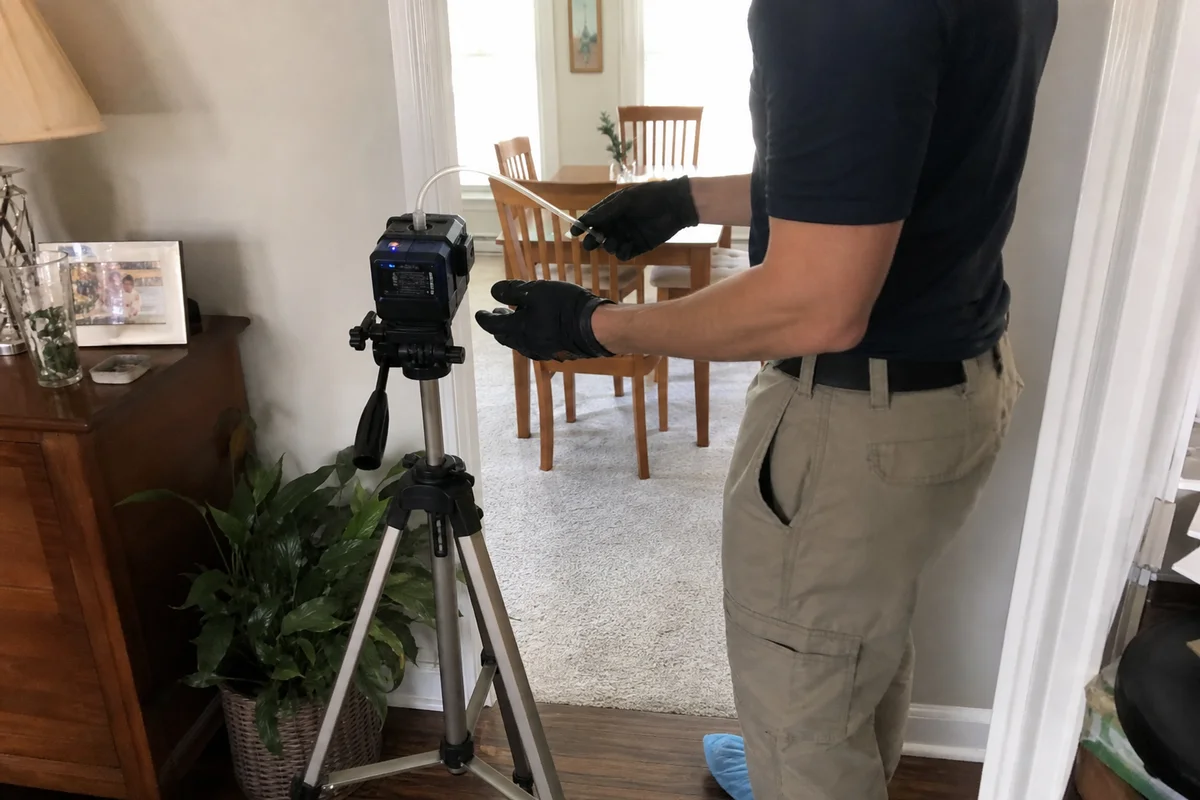
Testing (usually done by an independent Indoor Environmental Professional or IEP) is useful when:
- You suspect hidden mold but can’t see it
- You want to identify the species specifically
- You need documentation for insurance or real estate
- You want post-remediation verification that levels returned to normal
- Someone has been medically diagnosed with mold-related illness
Testing isn’t always necessary. If you see visible mold, in most cases remediation should proceed regardless of species — the response is the same. Read our mold inspection and air quality testing guide.
Why DIY is a bad idea
Scrubbing visible mold with bleach:
- Releases massive quantities of spores into the air
- Spreads contamination to other rooms via HVAC and foot traffic
- Fails to address moisture source, so mold returns
- Doesn’t remove mold from porous materials (paper, wood grain)
- Creates a bigger, more expensive remediation later
We’re regularly called in to fix DIY attempts that made small problems whole-house problems. Professional containment prevents that.
What professional remediation looks like
- Assessment and moisture source identification
- Containment barriers with negative air pressure
- HEPA air scrubbing during work
- Physical removal of affected porous materials
- Antimicrobial treatment on remaining materials
- Post-remediation verification (independent air testing)
See our full mold remediation service page and mold remediation process guide.
Bottom line
Black mold can be dangerous, especially for at-risk groups. Species matters less than presence. If you have visible growth, hidden suspicion, or symptoms, don’t wait and don’t scrub. Call (720) 842-1950 for a free assessment.