
Decision Guide
Mold Removal vs. Mold Remediation
Why 'total mold removal' is a myth and remediation is the real solution — returning spore levels to normal and choosing a qualified pro.
“Mold removal” and “mold remediation” sound like the same service, but they represent different philosophies — one of which is scientifically impossible. Understanding the difference helps you choose a legitimate provider.
Why “total mold removal” is a myth
Mold spores are everywhere. They’re in outdoor air, in dust, on your clothes, in your pantry. Every time you open a door, spores come in. Any indoor space open to outdoor air has some baseline level of mold spores — that’s normal, and it’s not a health issue.
“Mold removal” as a claim usually means one of three things:
- Removing visible mold from a specific area (which is legitimate — but incomplete)
- A marketing term for what is actually remediation
- An overpromise from a provider who lacks proper certification
What remediation actually does
Remediation returns indoor mold spore levels to normal indoor baseline — matching outdoor levels and levels in unaffected areas of the home. That’s a measurable, verifiable goal.
The process:
- Physical removal of colonized materials
- Cleaning of surfaces
- Antimicrobial treatment
- HEPA filtration of the air during work
- Post-remediation verification with air testing
The goal isn’t “zero spores” — that’s impossible. The goal is “no elevated indoor source causing symptoms.”
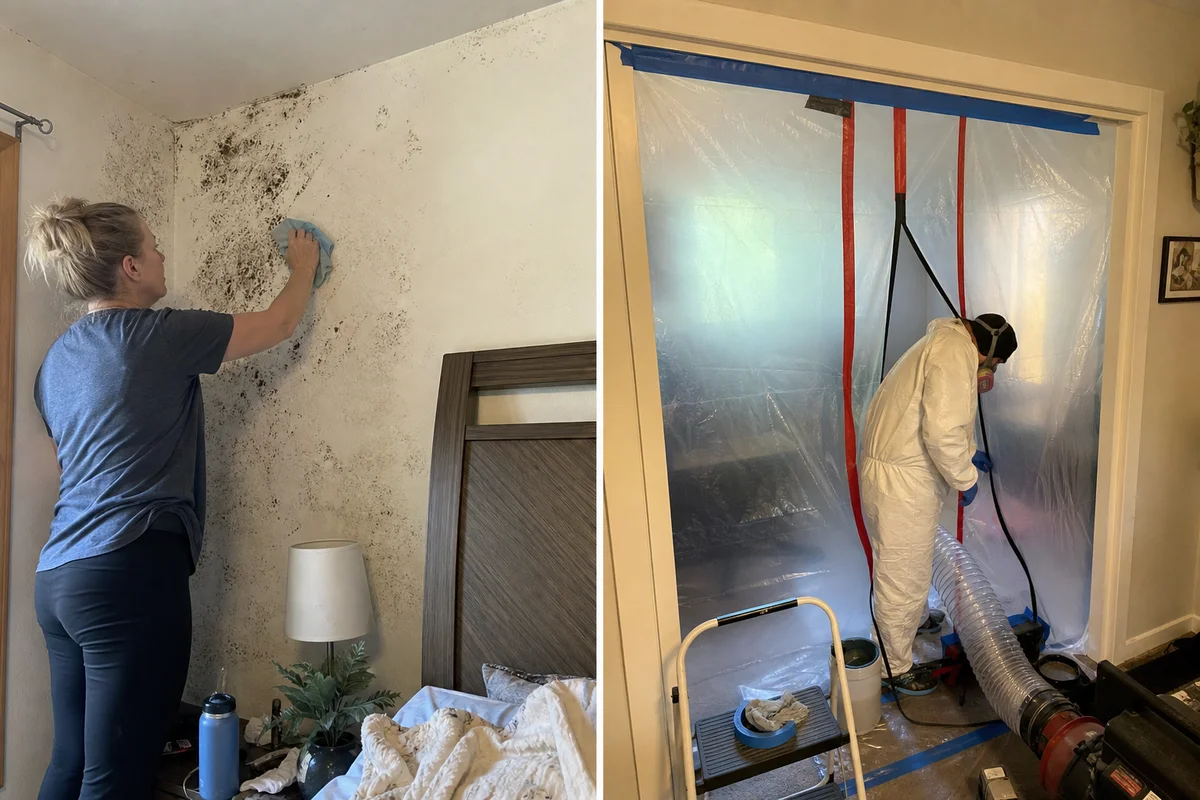
Containment vs surface cleaning
Surface cleaning only (what DIY and unqualified providers do):
- Wipe visible mold with bleach or antimicrobial
- No containment; spores disperse through home during work
- No verification
- Mold typically returns because moisture source isn’t addressed
- Hidden growth in cavities is untouched
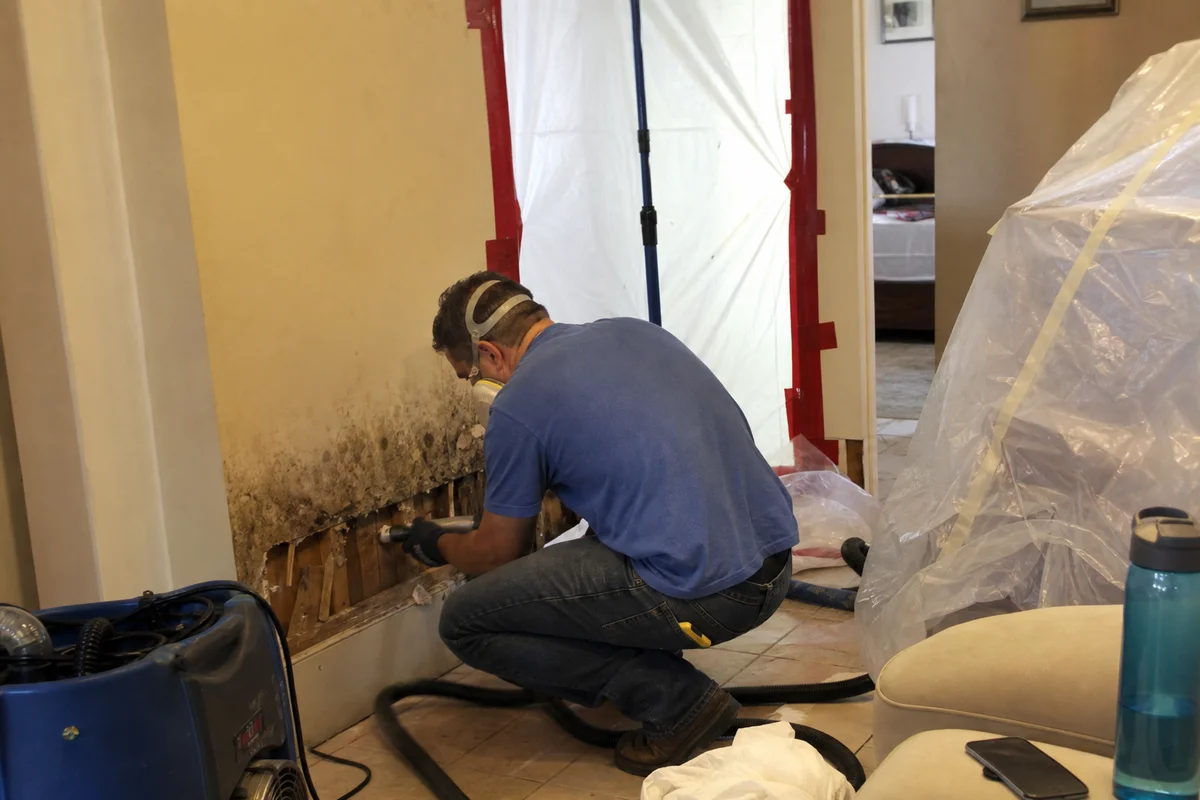
Proper remediation (IICRC S520 standard):
- Containment barriers with negative air pressure
- HEPA scrubbing of the work area air
- Physical removal of colonized materials
- Post-remediation verification with independent air testing
- Moisture source identification and fix
The difference is dramatic — both in effectiveness and in the risk of spreading contamination through the home.
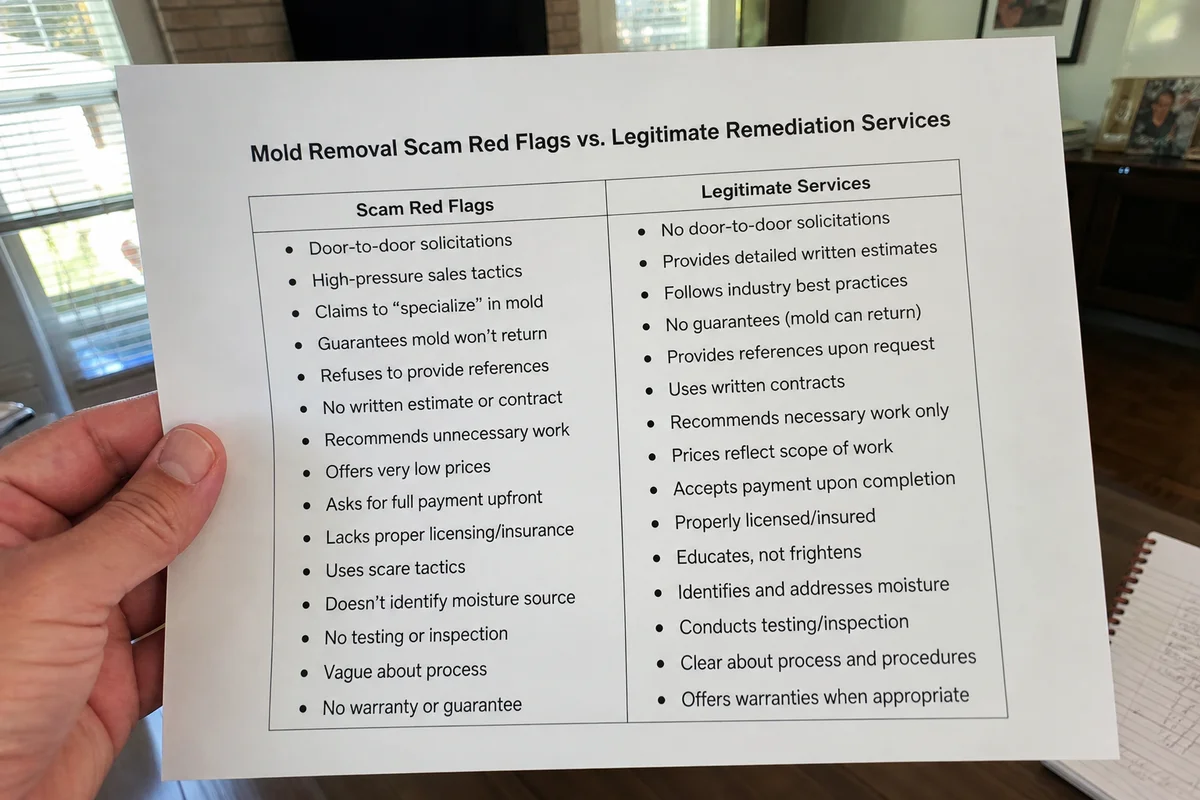
Red flags for mold service providers
Watch out for:
- “Complete mold removal” or “total elimination” claims — not scientifically possible
- No IICRC certification — the industry standard for remediation
- Skip containment for “simple” jobs — containment is standard for anything above minor surface work
- No post-remediation verification — testing is how you know it worked
- Push chemical treatments without physical removal — killing mold in place doesn’t remove it
- Unusually low prices — proper remediation has real costs
- Same company does testing and remediation — conflict of interest for clearance testing
- No moisture source discussion — if they don’t address the source, mold returns
What good providers do
- IICRC S520 certified technicians (ask for numbers)
- Written scope with clear methodology
- Containment and negative air as standard practice
- Independent third-party clearance testing
- Moisture source identification and coordination
- Insurance-friendly documentation if you’re filing a claim
See our mold remediation process guide for the full standard-based approach.
The moisture source is half the job
Remediation without addressing the moisture source is a waste of money. Mold grows because of moisture; remove one and remove the other.
Our approach: identify the source, remediate the mold, coordinate the moisture fix (plumbing, roofing, waterproofing) with appropriate specialists if needed. Sometimes the source is obvious (burst pipe, roof leak). Sometimes it takes moisture mapping and thermal imaging to find. Either way, it gets identified before remediation begins.
Cost expectations
- Small residential remediation (single bathroom, single wall): $1,500 to $4,000
- Medium job (finished basement, HVAC contamination): $4,000 to $10,000
- Large job (whole-basement, attic, extensive hidden growth): $10,000 to $30,000+
Prices vary based on scope, materials, testing needs, and reconstruction scope. Insurance often covers if tied to a covered water loss. See our mold insurance coverage guide.
Bottom line
Real remediation is expensive but it works. “Mold removal” that promises to eliminate all spores is either misleading marketing or an unqualified provider. Ask for IICRC certification, ask about containment and clearance testing, and choose accordingly.
Call (720) 842-1950 for a free mold remediation assessment with straight answers.