
Learn
Water Damage Categories 1, 2, and 3 Explained
The difference between clean, gray, and black water — the IICRC categories, health risks, and why category worsens over time.
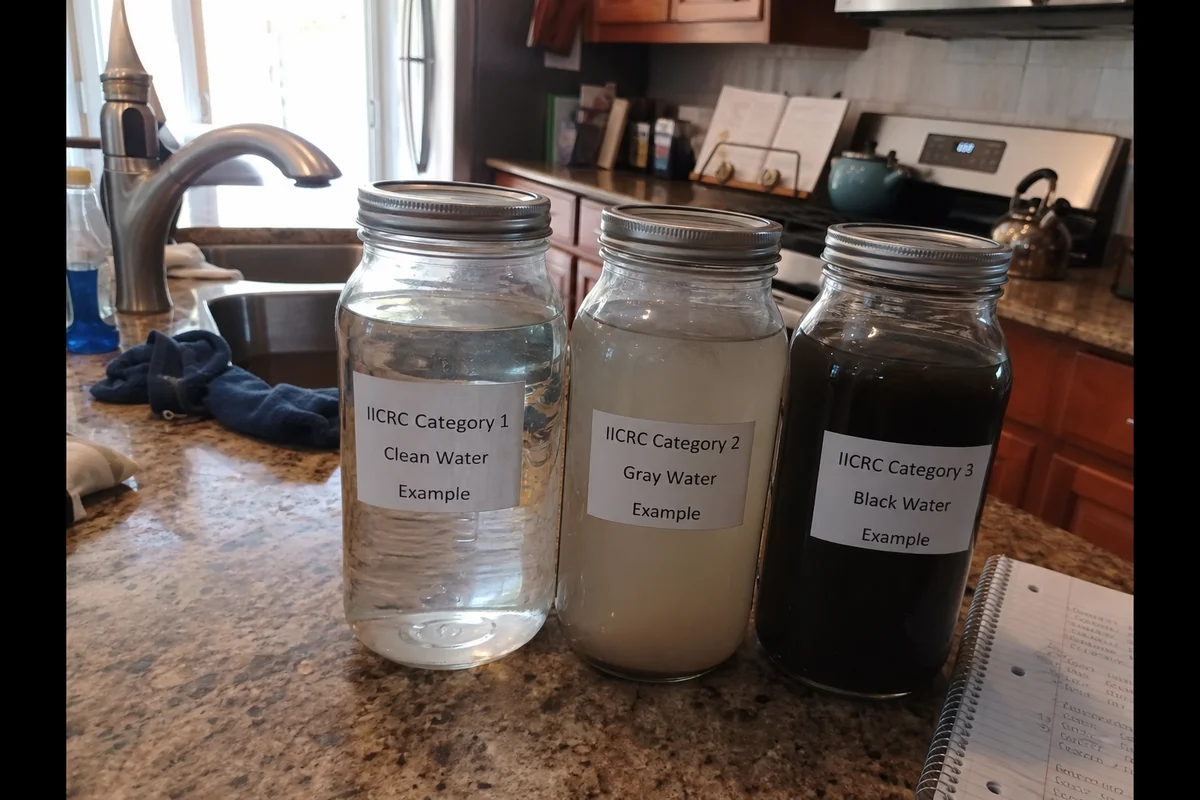
When restoration pros talk about “Category 1,” “Category 2,” and “Category 3” water, they’re referring to the IICRC S500 standard for water damage. It’s not just terminology — the category determines what has to come out, what can be dried, and how the work is done.
The three categories
Category 1 — Clean water. Water from a sanitary source that poses no substantial harm from contact. Examples: broken supply lines, overflowing sinks (without waste), rainwater directly from the sky. Materials contacted by Category 1 water can often be dried and saved.
Category 2 — Gray water. Water with significant contamination that could cause discomfort or illness. Examples: dishwasher or washing machine discharge, aquarium water, punctured waterbeds, toilet overflow (urine only), sump-pump failure water that has sat and absorbed contamination. Some porous materials can be dried; others must come out.
Category 3 — Black water. Grossly contaminated water containing pathogens, toxins, or harmful agents. Examples: sewage backups, flooding from rivers or streams, wind-driven rain from storm damage, standing water that’s been there long enough to support microbial growth. Most porous materials that contacted Category 3 water must be removed and disposed of.
Why category worsens over time
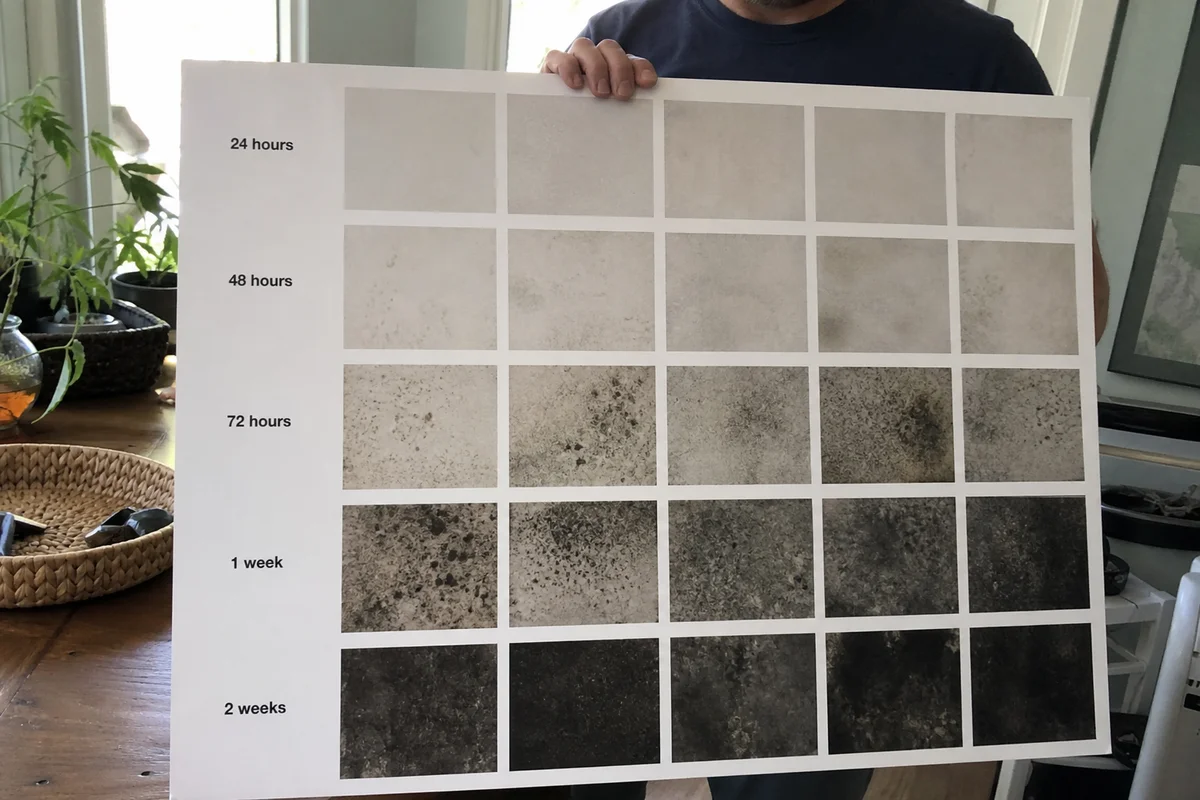
Category is not fixed at the source. A Category 1 leak becomes Category 2 in 24 to 48 hours as it contacts drywall, insulation, and organic matter. It becomes Category 3 in 72 hours or so as microbial growth accelerates. Warm temperatures speed this timeline; cold temperatures slow it slightly.
This is why fast response matters: the same event handled at hour 4 may cost half what it costs at hour 72.
Health implications
- Category 1: No health risk from short contact, though prolonged exposure to any standing water can be a slip hazard.
- Category 2: Skin contact and inhalation can cause illness. PPE is required for restoration crews.
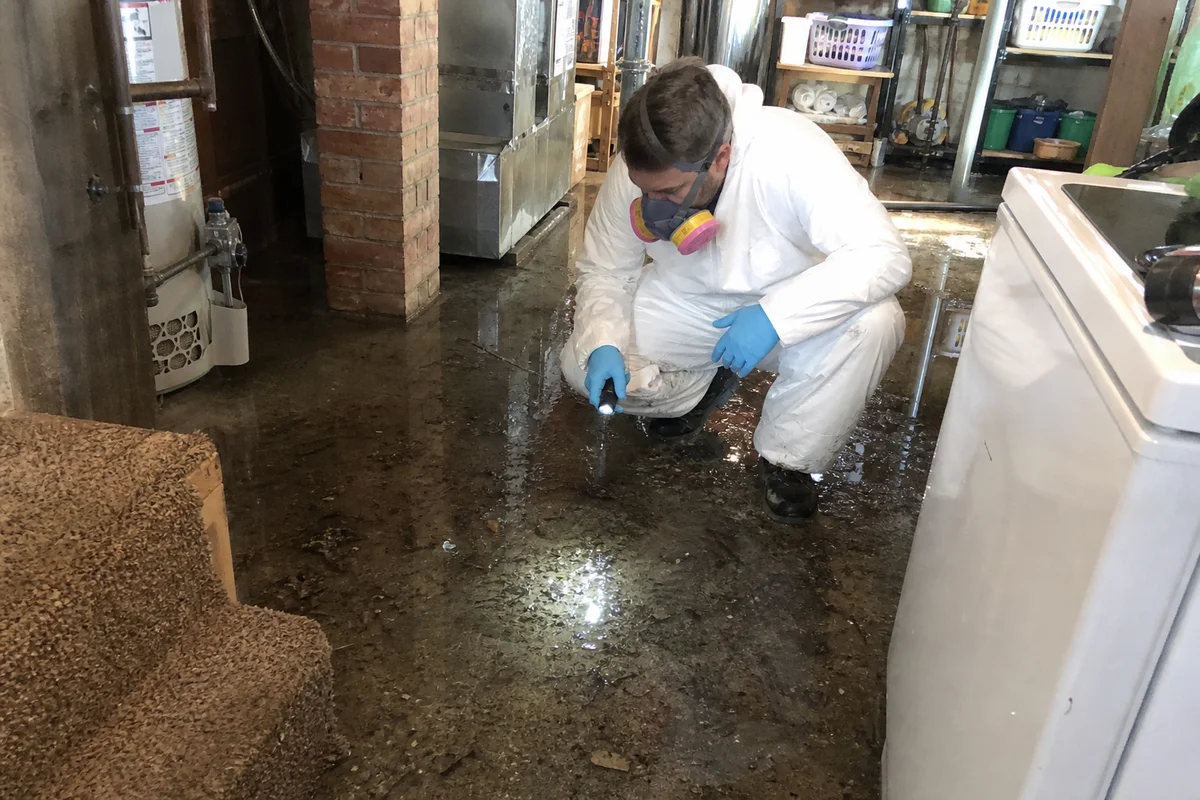
- Category 3: Serious health risk — pathogens, bacteria, viruses, mold spores. Full PPE (Tyvek suits, respirators, gloves) is required. Homeowners should stay out entirely.
How category drives scope
The IICRC S500 standard dictates what must be done based on category:
- Category 1: Extract, dry in place where possible, minimal removal
- Category 2: Remove and replace saturated pad and lower drywall; dry framing and subfloor after cleaning
- Category 3: Remove all porous materials that contacted the water; disinfect all non-porous surfaces; often flood-cut walls higher than 24 inches; may require containment
Insurance implications
Adjusters know these categories. Documentation of the water source, contact time, and category is essential for a smooth claim. We include category assessment in every scope, with photos and reasoning, so there’s no ambiguity for your carrier.
When it’s Category 3
Do not touch it. Get everyone out of the area. Call us immediately at (720) 842-1950 for Category 3 response. Details in our sewage backup and black water cleanup guide.
Bottom line
Water isn’t just water. Category matters — for your safety, your home, your claim, and the cost of water damage restoration. When in doubt, call us for a fast on-site assessment. Request a free inspection or call (720) 842-1950 any hour.