
Learn
Flooded Basement Cleanup in Castle Rock
What causes flooded basements in Douglas County and how pros extract, dry, and prevent mold after sump failure, groundwater, or storm runoff.
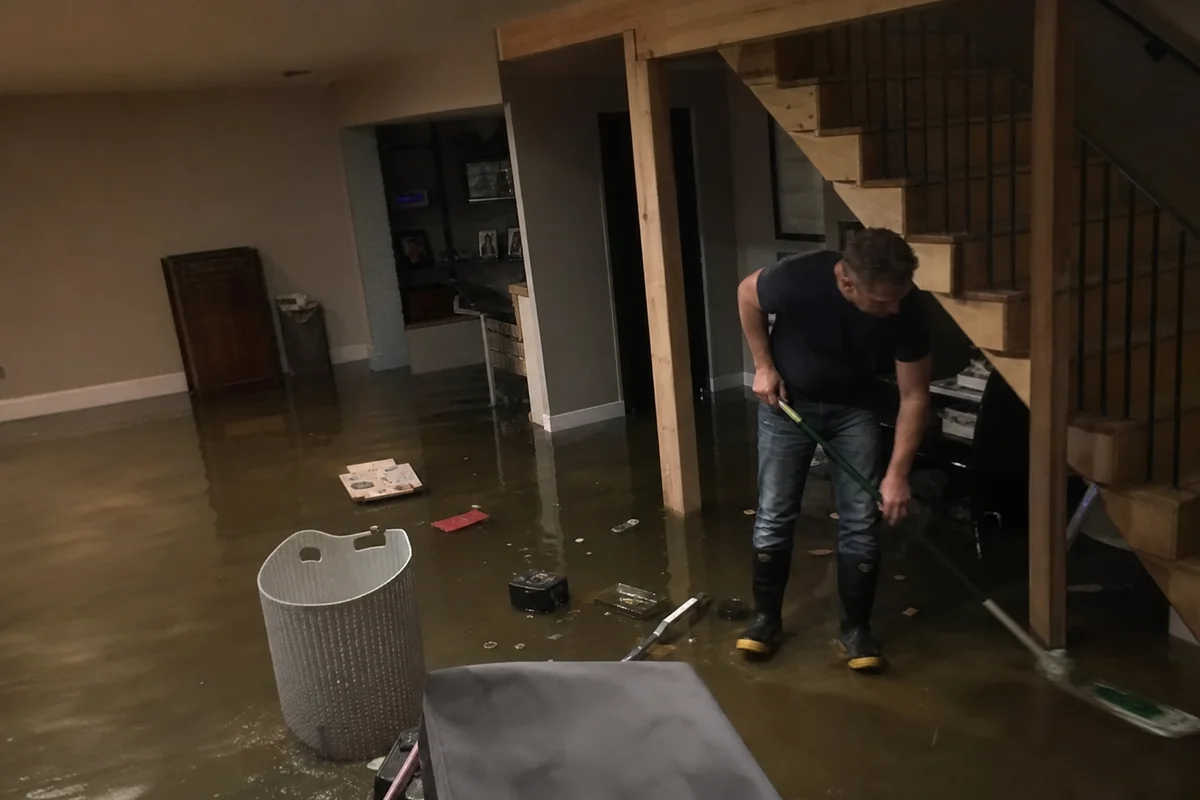
Flooded basements are one of our most common calls in Highlands Ranch, Castle Rock, Parker, and Lone Tree. Finished basements are common here, and the ways they flood are just as common. Here’s what causes it, how we handle it, and what you should do the moment you find water.
The three main causes in Douglas County
Sump-pump failure. The most common cause we see. Pumps have a service life of about 7 to 10 years. When they fail — often during a power outage or a heavy rain event when they’re needed most — groundwater rises into the sump pit, overflows, and spreads across the basement floor.
Groundwater and high water table. After sustained heavy rain, hydrostatic pressure builds against the foundation. Water finds cracks, penetrations, and any weak point. Homes near creek basins (like Plum Creek in Castle Rock) are especially exposed to flash flooding.
Storm runoff and drainage backup. Poor grading, clogged gutters, and overwhelmed municipal drainage push water toward foundations. Window wells fill and leak in through window frames. Floor drains back up when the sanitary system is overwhelmed.
Other causes we see: burst pipes in unheated basements during cold snaps, water heater ruptures, and appliance-line failures (washing machine, refrigerator ice maker) draining down to the lowest floor.
Our extraction and drying process
Step 1: Safety and shutoff. We kill power to affected circuits before anyone enters standing water. We shut off water at the main if there’s an active leak.
Step 2: Extraction. Truck-mounted extractors pull standing water from carpet, subfloor voids, and behind appliances. This is the most time-critical step — every hour it sits, more materials become unsalvageable.
Step 3: Content triage. We inventory and pack out damaged contents. Photos, documents, and electronics get priority — the salvage window is short. Furniture is elevated on blocks or moved out.
Step 4: Material assessment. We check every material: carpet, pad, drywall, insulation, subfloor, framing. Saturated pad and carpet in Category 2 or 3 water usually can’t be saved. Framing and subfloor usually can if we act fast.
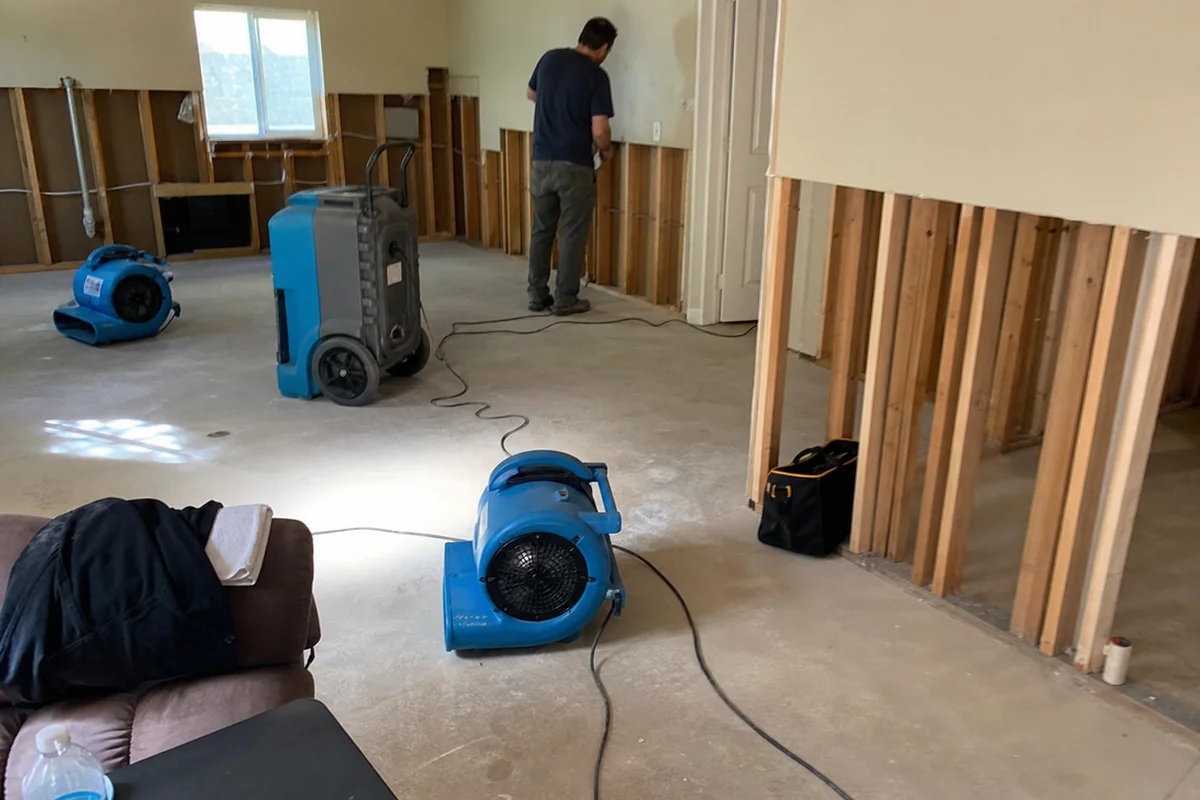
Step 5: Flood cuts. For drywall with wicking above the water line, we flood-cut at 24 inches — enough to dry the cavity properly without removing the whole wall.
Step 6: Structural drying. LGR dehumidifiers and air movers, placed based on psychrometric calculations. Monitored daily with moisture meters. Adjusted as materials dry unevenly.
Step 7: Documentation. Xactimate scope, photos, moisture logs — everything your adjuster needs, delivered straight to them.
Finished basements: what usually gets replaced
Realistically, in a finished basement flood:
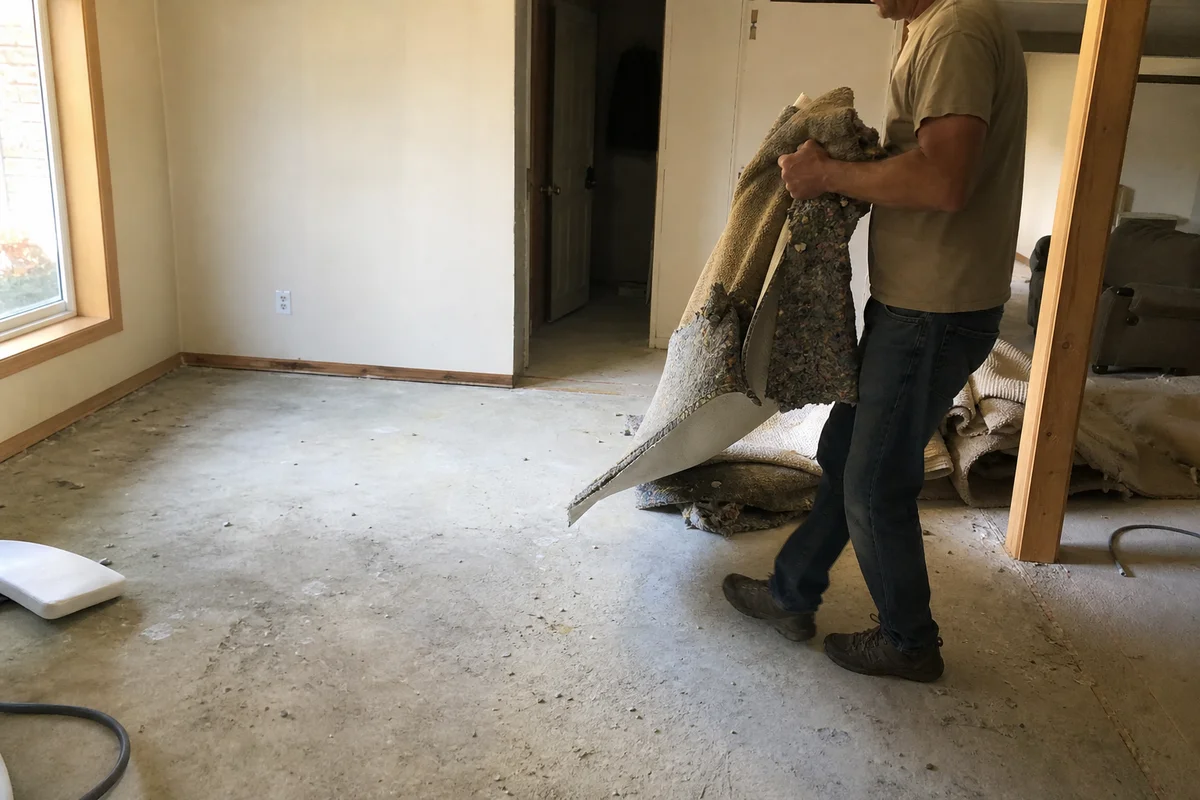
- Almost always replaced: carpet pad, wet fiberglass insulation, saturated drywall below 24 inches, particleboard cabinets that swelled
- Often salvaged: carpet itself (removed, off-site cleaned, re-installed), framing, subfloor, hardwood floors (with specialized drying)
- Case by case: finished furniture, electronics, kids’ toys and books
Mold prevention is part of the job
Mold begins in 24 to 48 hours in wet materials. We prevent it by:
- Getting extraction started within hours
- Removing materials that can’t be dried to standard
- Drying every remaining material to the dry standard, monitored daily
- Applying antimicrobial to exposed framing before reconstruction
Read more in our what causes mold after water damage guide.
When it’s sewage
If the water is contaminated — sewage backup, storm surge, or Category 3 — it’s a biohazard, not just wet stuff. Different PPE, different disposal, different materials come out. See our sewage backup and black water cleanup guide and call us immediately. Don’t touch it.
Preventing the next flood
- Test your sump pump twice a year — pour a bucket in the pit
- Install battery or water-powered backup
- Wi-Fi water sensors near the sump and in the utility room
- Elevate contents 12+ inches off the basement floor
- Check grading and gutters annually — direct water away from the foundation
Call us
If your basement is flooded right now, call (720) 842-1950. Live dispatch, 24/7. Crews reach Highlands Ranch, Castle Rock, Parker, and Lone Tree fast. Our water damage restoration team handles extraction, drying, documentation, and direct insurance billing.