
Learn
Signs of Hidden Water Damage Behind Walls and Floors
Musty smell, stains, warping, high bills? The warning signs of a hidden leak before it becomes catastrophic in your Castle Rock home.
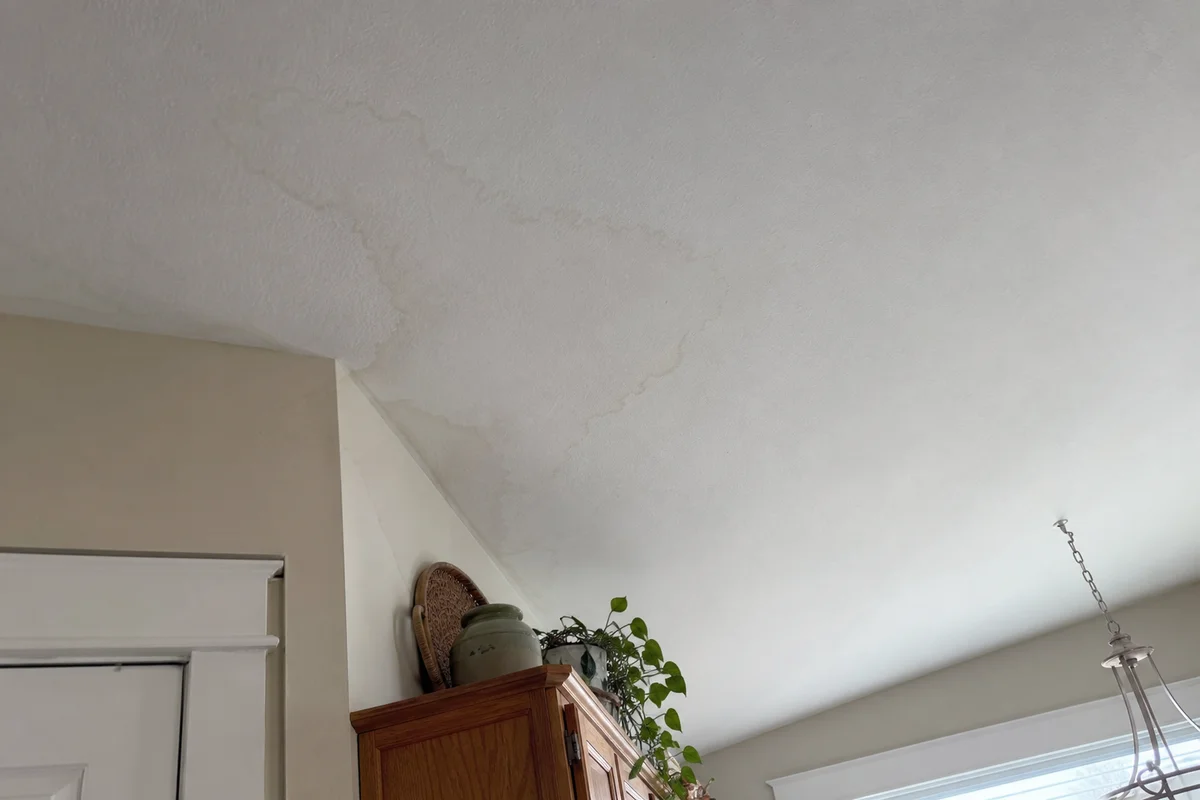
Not every leak announces itself with a puddle. Some of the worst water damage jobs we see started as small, hidden leaks that ran for weeks or months before the homeowner noticed a stain, a smell, or an unusually high water bill. Here’s what to watch for — and how we find water when it’s not obvious.
The classic warning signs
- Stains on ceilings, walls, or floors — yellow, brown, or reddish rings, often expanding
- Warping or buckling floors — especially hardwood, laminate, or vinyl
- Bubbling or peeling paint or wallpaper on interior walls
- A musty, damp, or “old basement” smell that doesn’t clear with ventilation
- Sagging or soft spots in drywall or subfloor
- Discoloration or dark spots around windows, tubs, and plumbing fixtures
- A sudden spike in your water bill with no obvious cause
- Warm spots on the floor (potential hot-water slab leak) or cold spots (cold-water)
- Reduced water pressure at one or more fixtures
- Sound of running water when nothing is on
Any single sign might have a benign explanation. Two or more together usually means moisture is present.
Where hidden moisture likes to hide
- Under bathroom flooring — around toilets, tubs, and shower pans
- Behind kitchen cabinets — dishwasher and refrigerator supply lines fail slowly
- In basement corners — foundation seepage and sump-pit overflow
- Around windows — flashing failures and weatherstripping breakdown
- Attic — roof leaks and ice-dam damage often show up here first
- In walls behind laundry rooms — washer supply hoses fail without warning
- Along the base of walls near exterior siding — slab leaks, groundwater intrusion
- HVAC and utility rooms — condensate line failures, water heater drips
How we find hidden water
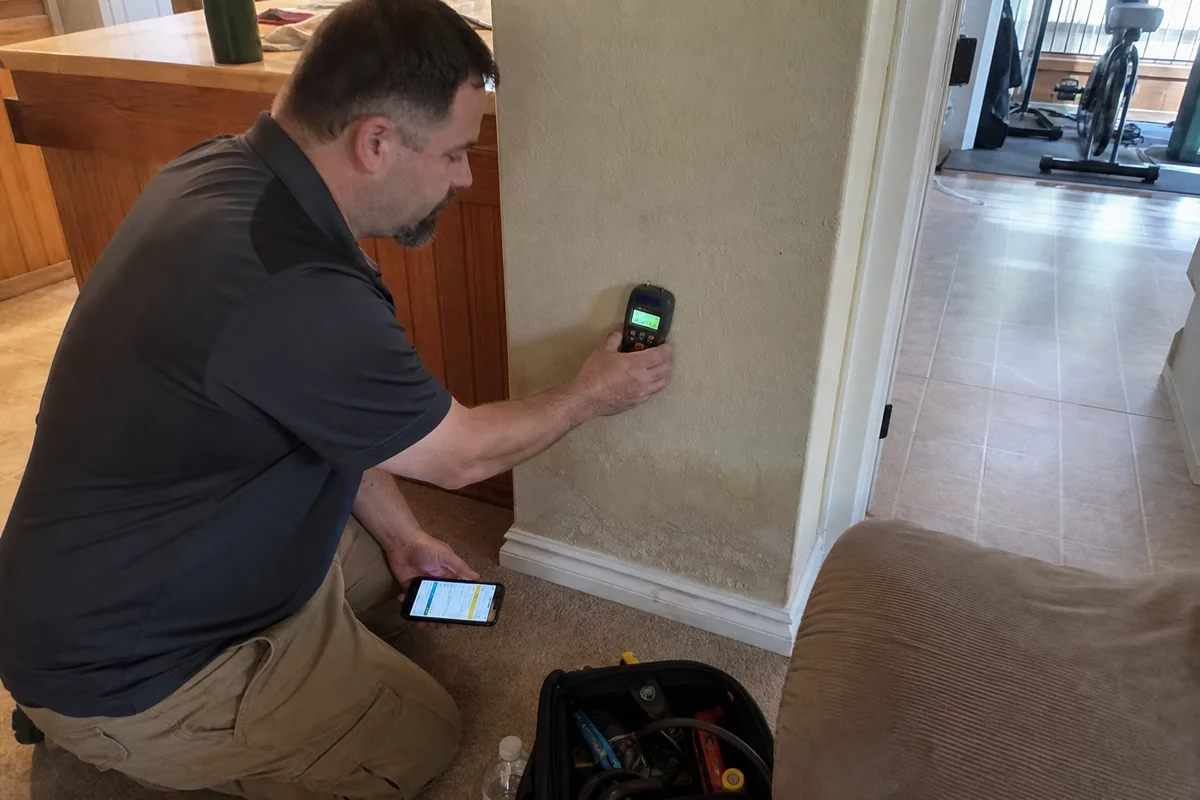
Our inspection process starts non-invasively. We use:
- Moisture meters (pin and pinless) to measure moisture content in materials without cutting
- Thermal imaging cameras to spot temperature differences that indicate wet materials
- Borescope cameras to look into wall cavities through small access holes
- Hygrometers to measure ambient humidity and identify condensation-driven damage
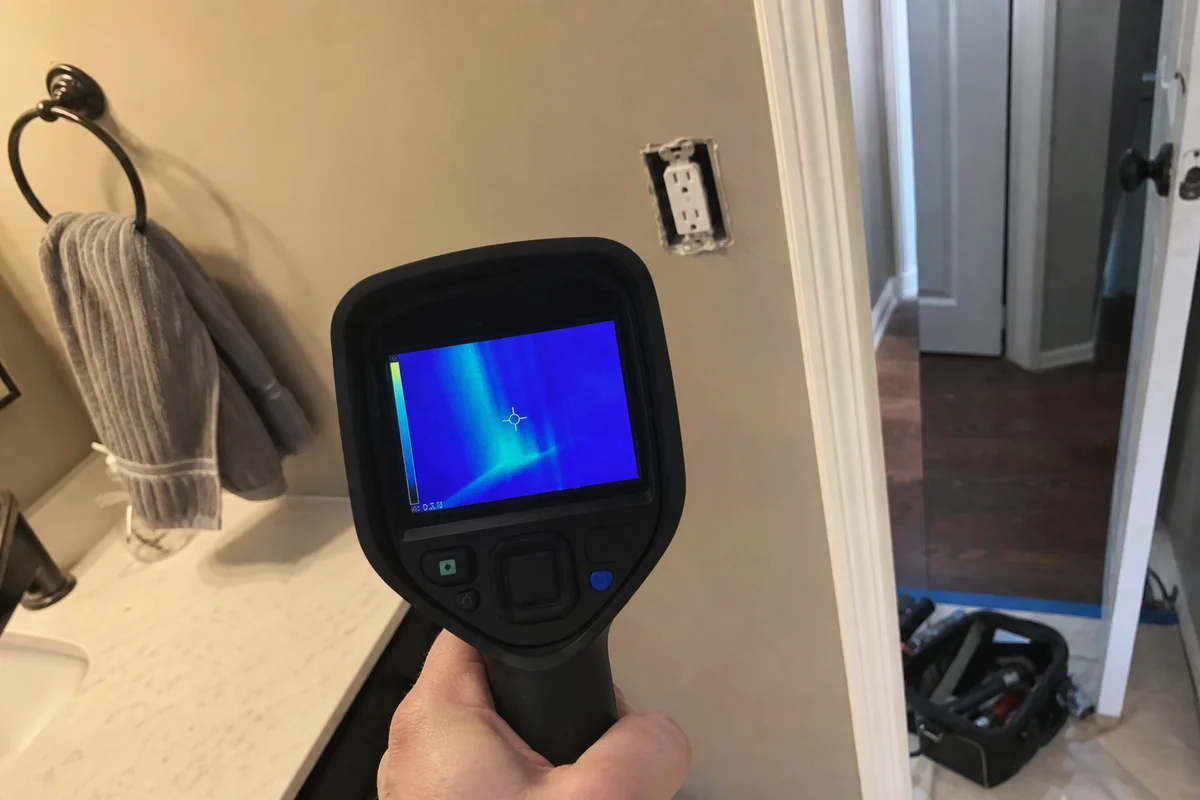
Only after we’ve narrowed the location do we consider opening drywall or flooring — and even then, minimally. The days of tearing out a whole wall to look for a leak are over.
The risk of ignoring hidden moisture
The reason we push on early detection: hidden moisture leads to hidden mold. In wall cavities and under floors, moisture sits undisturbed at temperatures mold loves. By the time you can smell it or see it, growth is typically already extensive.
Colorado’s dry climate helps — but only if the moisture is exposed to that dry air. Sealed cavities behave more like the humid coasts than the semi-arid Front Range.
Learn more in our what causes mold after water damage guide.
When to call us
If you’re seeing one or more of the warning signs above, book a moisture inspection. It’s a low-cost, non-invasive way to confirm whether you have a problem before it becomes a wall-out remediation. We’ll tell you honestly whether you need immediate action or just monitoring.
Call (720) 842-1950 about water damage restoration or request a free inspection. If you find active water, don’t wait — start with our first 24 hours after water damage guide.