
Learn
Can Water-Damaged Hardwood Floors Be Saved?
Specialized dry-in-place systems can save cupped hardwood without tear-out. When wood is salvageable, the timeline, and cost vs replacement.
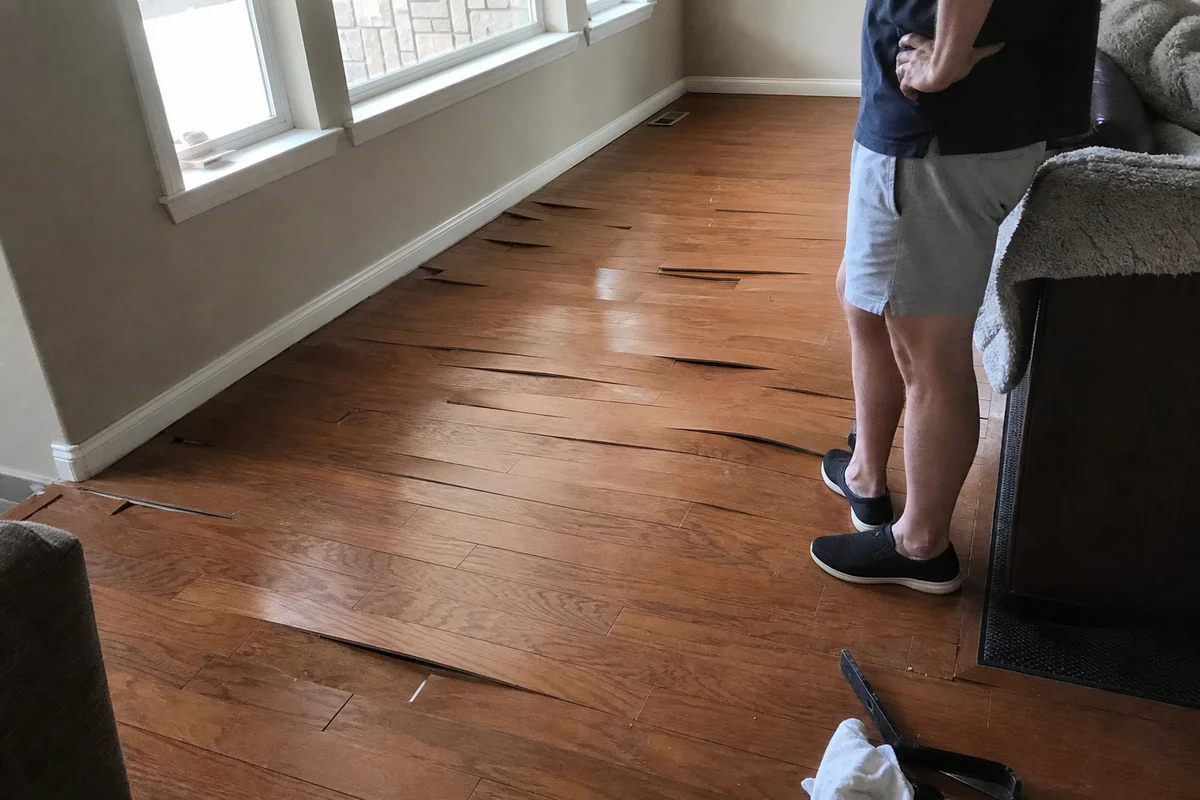
Hardwood floors are among the most emotionally and financially significant materials in a home. When they get wet — from a burst pipe, an overflowing dishwasher, or a flooded basement — homeowners often assume they’re gone. That’s frequently not true. Specialized dry-in-place systems can save hardwood that would otherwise be torn out.
Why hardwood cups when it gets wet
Wood absorbs moisture from below faster than from above. When water sits on top of hardwood or, more commonly, seeps into the subfloor beneath it, the underside swells while the top stays relatively dry. That differential swelling creates cupping — the classic “wave” pattern where the edges of each board rise higher than the center.
Left long enough, cupping becomes permanent (called crowning after it dries flat again but doesn’t relax). And the wood eventually checks, splits, or delaminates entirely.
Dry-in-place vs tear-out
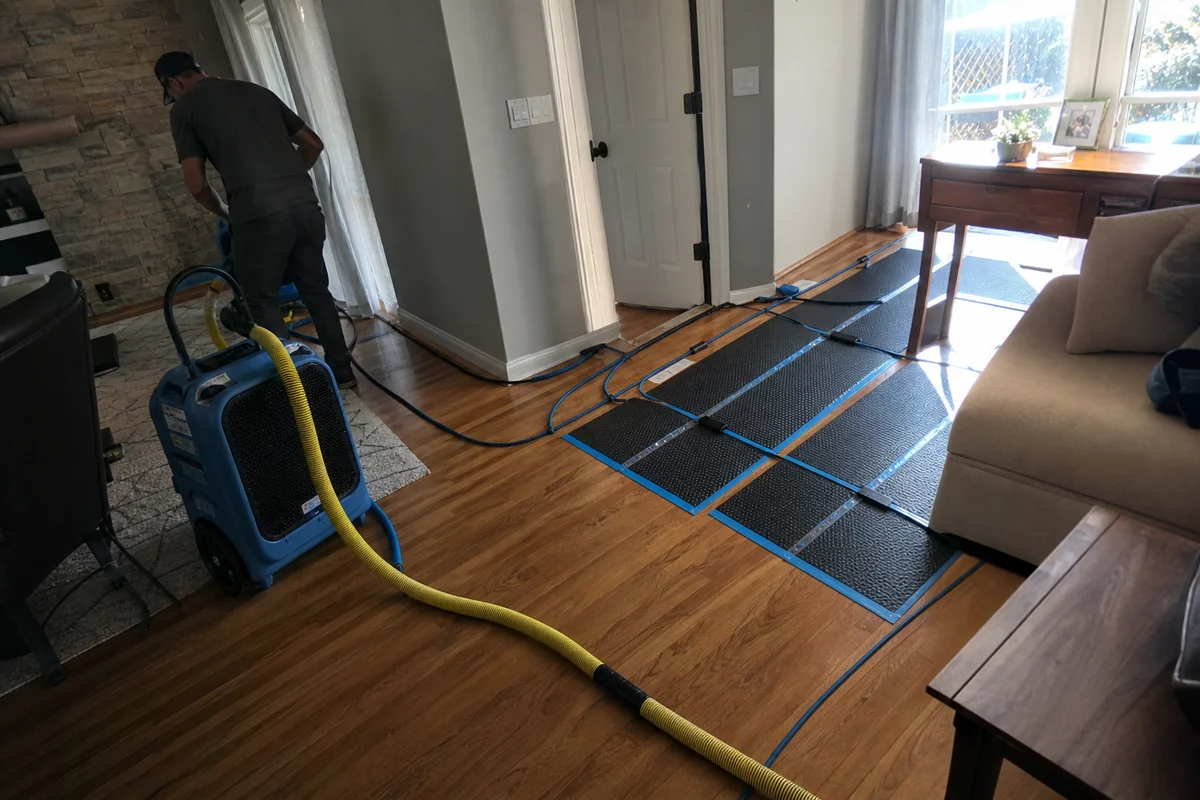
For decades, water-damaged hardwood meant tear-out and replacement. Modern restoration uses two systems that dry the wood in place instead:
Injectidry floor drying mats. Perforated mats laid over the affected floor, connected to a specialized drying unit. Negative pressure pulls moist air from between the boards, drying from below without lifting or damaging the floor.
Floor-mat vapor pressure systems. Similar concept, different equipment. Sealed mats create a vapor pressure differential that draws moisture out of the wood over time.
When wood is salvageable — and when it isn’t
Usually salvageable:
- Cupped floors caught in the first 48 to 72 hours
- Solid hardwood (oak, maple, walnut, cherry)
- Exotic woods that can’t be easily matched
- Floors where the source is stopped and no ongoing water intrusion
Usually not salvageable:
- Floors that have been wet for a week or more
- Engineered hardwood with delaminated layers
- Water-damaged floors from Category 3 (sewage) — contamination through joints
- Floors with visible checking, splits, or heavy warping already
We assess honestly. If the floor can’t be saved, we tell you and start planning removal. Neither outcome benefits from wishful thinking.
The timeline
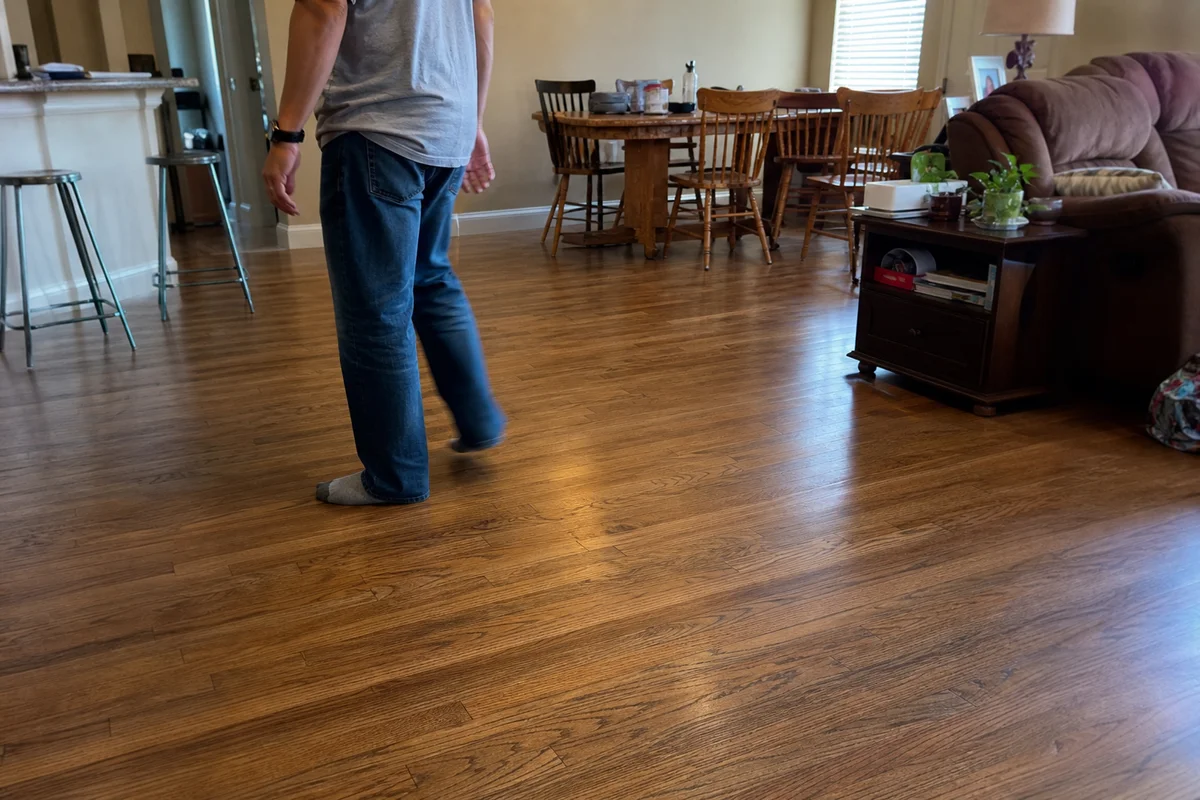
Standard water damage drying runs 3 to 5 days. Hardwood drying runs longer — typically 7 to 14 days — because wood releases moisture slowly. Our tech monitors daily, adjusting equipment and moisture readings until the wood returns to its normal moisture content (typically 6 to 9 percent in Colorado’s dry climate).
After drying, minor cupping usually relaxes on its own. Sometimes light refinishing (sand and re-seal) is warranted after full drying to restore the original look.
Cost vs replacement
For a typical Douglas County finished basement or main-floor water event affecting 200 to 400 square feet:
- Dry-in-place hardwood: roughly $3,000 to $7,000 depending on scope
- Full tear-out and replacement (mid-grade oak): $8,000 to $15,000 plus 3 to 6 weeks of disruption
- Exotic or reclaimed wood replacement: often $15,000+ if a match can be found at all
Drying is almost always the more economical choice when the floor is salvageable. It also preserves the original character of the wood, which matters for older homes or wide-plank installations.
Insurance implications
Most homeowners policies cover both approaches. Adjusters generally prefer drying when it’s viable — it’s cheaper and less disruptive. We include dry-in-place proposals in every scope where the floor qualifies. Read more in our restoration vs replacement guide.
If your hardwood got wet today
Time matters. Call us at (720) 842-1950 within the first 24 hours if you can. The faster our water damage restoration crew can get drying equipment in place, the higher the chance of full salvage. For a free on-site assessment, request an inspection.