
Decision Guide
The Water Damage Restoration Process, Step by Step
From inspection and moisture mapping to extraction, drying, and clearance — exactly what to expect during professional restoration.
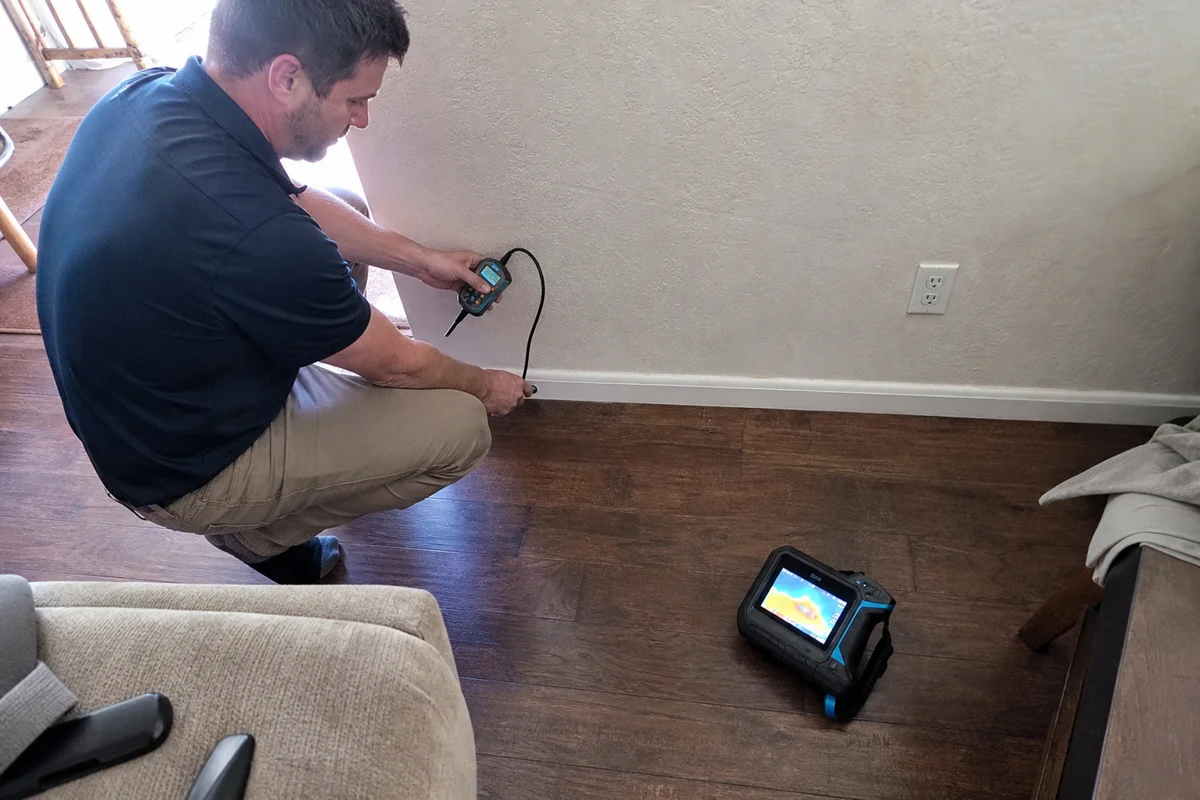
If you’ve never had water damage before, the restoration process is opaque — you know the crew showed up, put a lot of equipment in your house, and pulled it out a week later. Here’s exactly what happens, and why each step matters.
Step 1: Emergency dispatch and inspection
Live dispatch answers the call. A certified crew is on the way immediately for local Castle Rock, Parker, Highlands Ranch, and Lone Tree calls. On arrival:
- Safety check. Electrical hazards, structural risks, contamination assessment.
- Source identification. Where is the water coming from, and has it been stopped?
- Moisture mapping. Thermal imaging and moisture meters find visible and hidden water.
- Category and class determination. IICRC S500 classification drives the entire scope.
- Documentation baseline. Photos, video, moisture readings — the claim starts here.
Step 2: Water extraction
Truck-mounted and portable extractors remove standing water from carpet, subfloor voids, and hidden cavities. This is the most time-sensitive step — every hour of standing water increases material loss and mold risk.
For finished basements, this is typically a 2 to 6 hour phase depending on affected area.
Step 3: Content triage and pack-out
Salvageable contents get inventoried, packed, and either restored in place or transported to our secure facility for off-site cleaning. Documents, photos, electronics, and textiles have short salvage windows — they’re prioritized.
Damaged contents are inventoried for insurance documentation and set aside for disposal.
Step 4: Material assessment and removal
Materials that can’t be dried to the IICRC standard come out:
- Wet carpet pad (almost always)
- Saturated drywall (below the water line, flood-cut at 24 inches)
- Wet insulation (fiberglass compresses and holds moisture)
- Particleboard cabinets that swelled
Materials that will dry — framing, subfloor plywood, concrete, hardwood — stay in place and dry with equipment.
Step 5: Structural drying
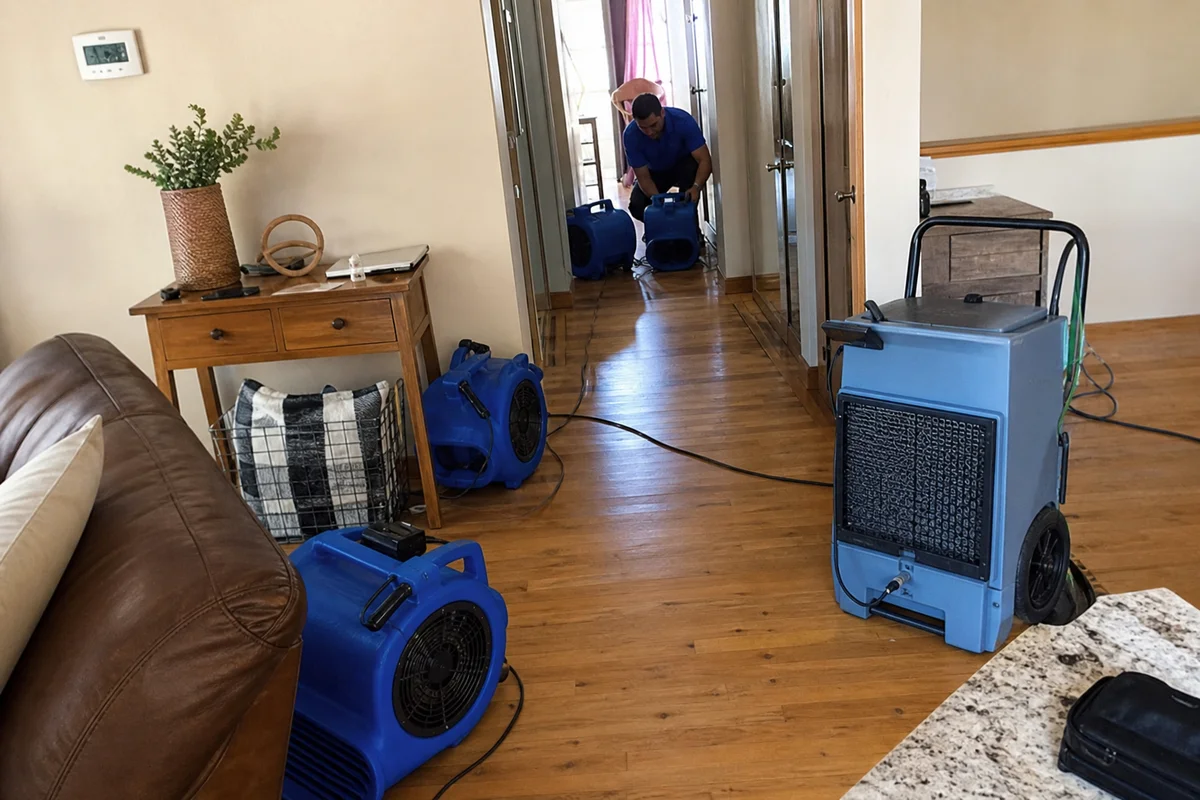
LGR dehumidifiers and air movers are placed based on psychrometric calculations (not guesswork) — enough equipment to remove the calculated water load in the target timeline.
Daily monitoring:
- Temperature and humidity of the space
- Moisture content of every material type
- Equipment performance (grains per pound removed)
- Adjustments to equipment placement as materials dry unevenly
Drying continues until every material reads at or below the dry standard for its type. Typically 3 to 5 days for standard jobs. Hardwood and heavy concrete can take longer.
Step 6: Cleaning and antimicrobial treatment
Once dry, exposed materials get cleaned and treated with EPA-registered antimicrobial to prevent mold as reconstruction begins. For Category 2 or 3 water, this step is more extensive — full disinfection of every surface.
Step 7: Final moisture verification
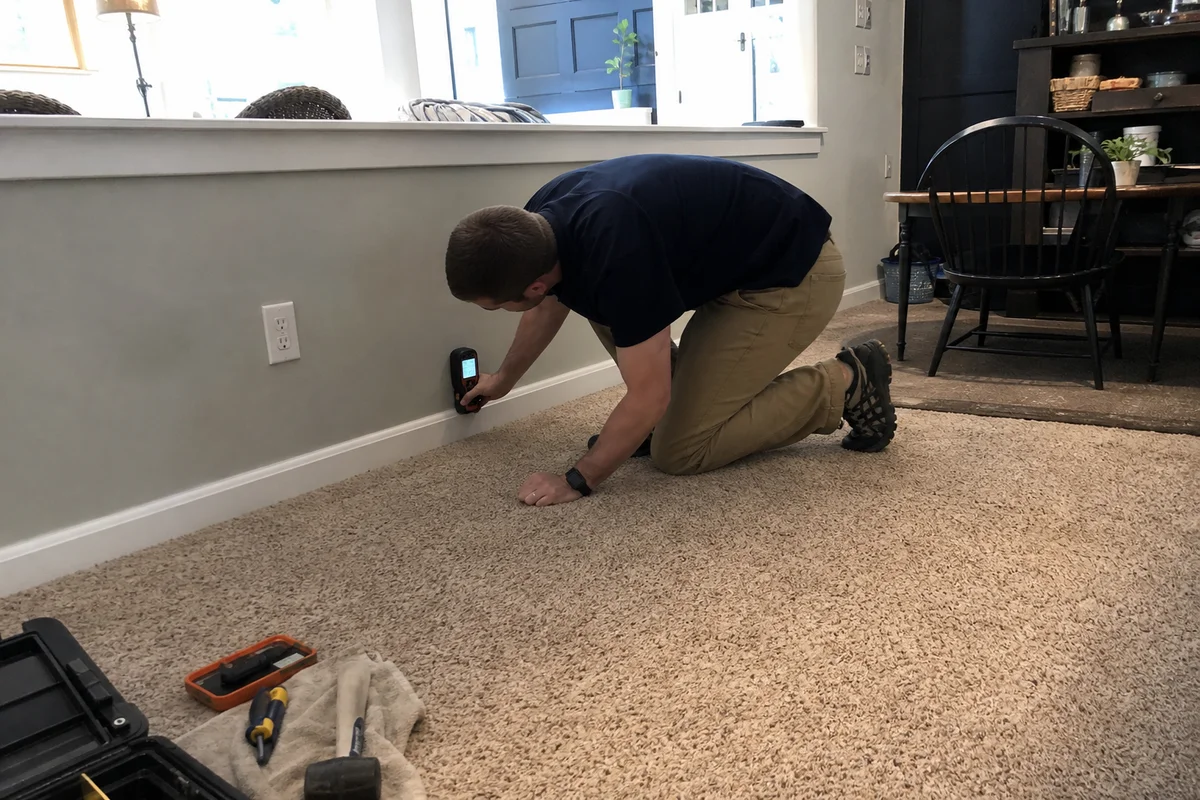
Before we take equipment down, we do a final moisture sweep and document every reading. This proves the job met the dry standard and gives you (and your adjuster) confidence the reconstruction phase is starting on dry materials.
Step 8: Reconstruction
New drywall, insulation, paint, carpet, cabinets, trim — whatever was removed gets rebuilt. Same specifications as pre-loss condition. We coordinate the scope with your adjuster; you get one project manager for the whole job.
Timeline: usually 2 to 6 weeks depending on scope. Some jobs finish faster (small mitigation-only jobs), others take longer (large reconstruction with custom finishes).
Step 9: Final walkthrough and closeout
You walk the space with our project manager. Any punch list items get resolved. We hand off the full documentation package to you and your adjuster — photos, moisture logs, scope, and final invoice.
Insurance timing throughout
Every step generates documentation your adjuster needs. We coordinate with them throughout — no surprises at the end, no scope changes on the invoice, no bills you weren’t expecting.
Read more in our Colorado water damage insurance guide.
Call us
If you’re in a water damage restoration emergency, call (720) 842-1950. Live dispatch 24/7. For a walkthrough of your options before you need us, request an inspection — we can walk your home and help you understand what a claim would look like if things go wrong.