
Learn
What to Do in the First 24 Hours After Water Damage
The first hour after water damage decides what's saved. Safety steps, what to move, and when to call a Castle Rock pro.
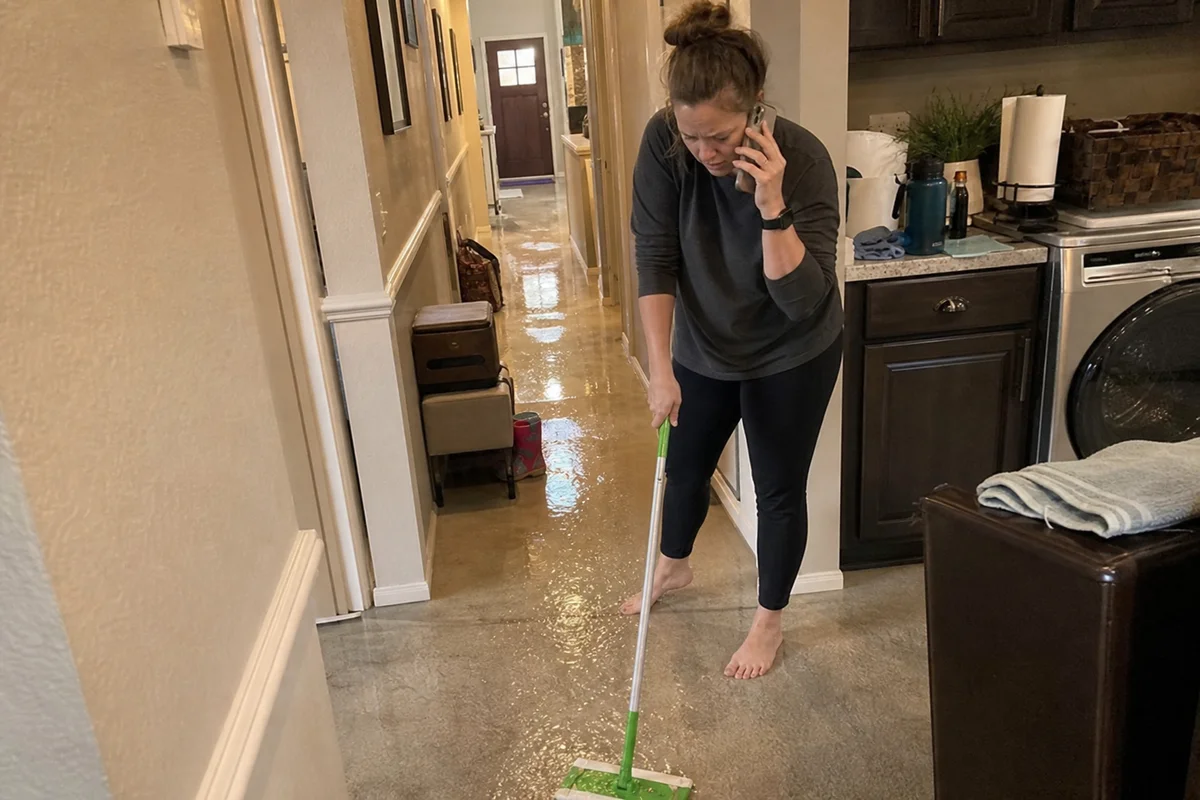
Water damage doesn’t wait. The first hour after you discover it — a burst pipe, a flooded basement, an overflowing appliance — is the hour that decides what can be saved and what has to be replaced. Here’s what to do, in order.
The first 15 minutes: safety first
Water and electricity are the immediate risk. If you can safely reach your electrical panel from a dry path, kill power to the affected areas. If the panel is wet, in the water, or you can’t reach it safely, do not enter the water. Call your utility to cut power at the meter.
Next, stop the source if you can:
- Burst pipe or supply line? Turn off the water at the main shutoff (usually near where the water enters your home, often in the basement or utility room).
- Overflowing appliance? Shut off the local valve behind or under the appliance.
- Sewage backup? Do not touch the water. Category 3 water is a biohazard. Move everyone upstairs and out. Call us immediately.
- Storm/roof leak? Move contents out of the drip zone. Set buckets. Wait for daylight to inspect the roof if it’s safe.
Now check for structural signs of danger — sagging ceilings from ponding water, warped floors, cracks. Sagging ceilings especially can collapse suddenly and cause serious injury. Stay clear.
Minutes 15-60: document, then move what you can
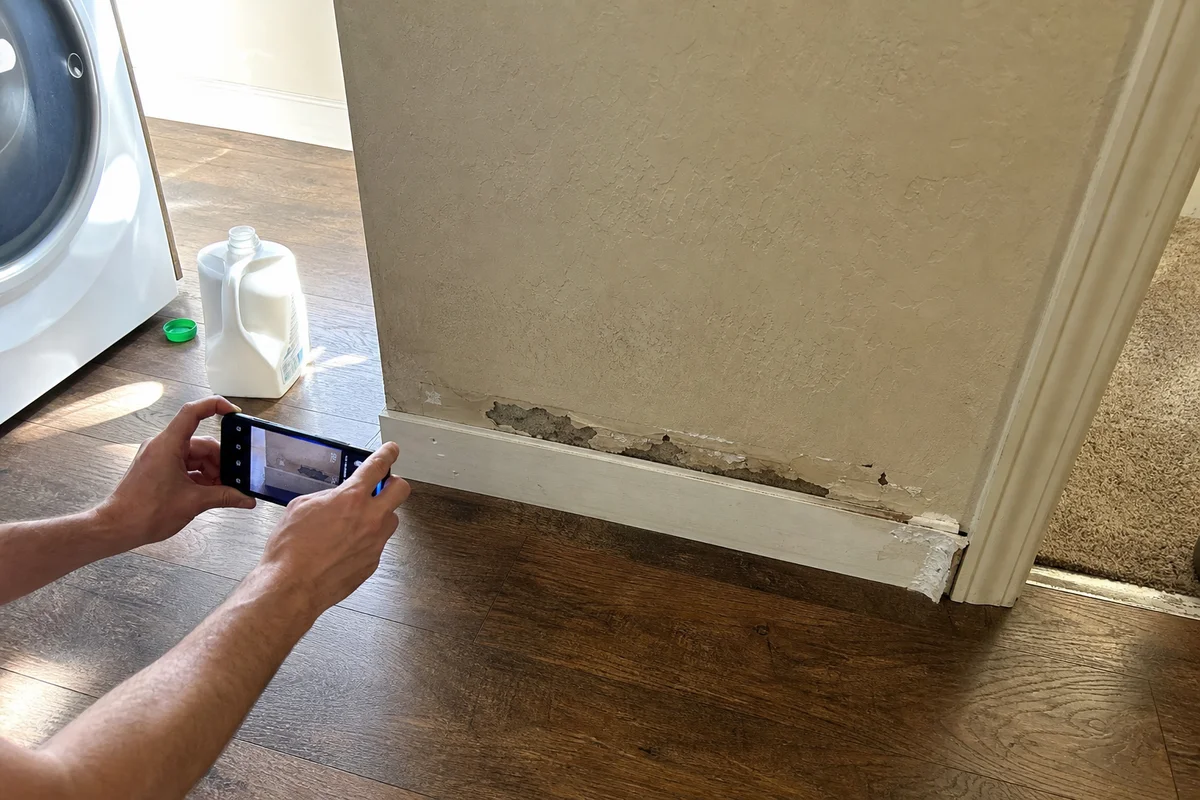
Before you touch anything, photograph everything. Time-stamped photos and video are your best friends in the insurance conversation that comes next. Get:
- Wide shots of every affected room
- Close-ups of standing water, water lines on walls, damaged floors
- The source (broken pipe, failed appliance, overflowing fixture)
- Wet or damaged contents, especially high-value items
Once you’ve documented, start moving what you can save:
- Electronics off the floor and out of the wet area
- Photos, documents, keepsakes — the freeze-drying window is short if these got wet
- Rugs, cushions, small furniture — move upstairs or to dry areas
- Elevate large furniture on aluminum foil or wood blocks to lift it off wet carpet
Do not use a household vacuum on standing water — most aren’t rated for it and you’ll damage the vacuum or shock yourself.
What NOT to touch
- Sagging ceilings — leave the area
- Contaminated water (sewage, storm surge, anything cloudy or smelly)
- Wet electronics that were plugged in — leave power off until they’ve been evaluated
- Insulation and drywall soaked from Category 3 water — this needs professional handling
Hour 1: call a certified pro
For anything beyond a small, quickly-dried clean-water spill, call us. Reasons:
- Water spreads into subfloor and wall cavities within hours — you can’t see it, but it’s there
- Drying to the IICRC standard requires commercial equipment, not household fans
- Category worsens over time (Category 1 becomes 2 becomes 3)
- Mold begins in 24 to 48 hours
- Insurance documentation you’ll need has to happen before disturbance
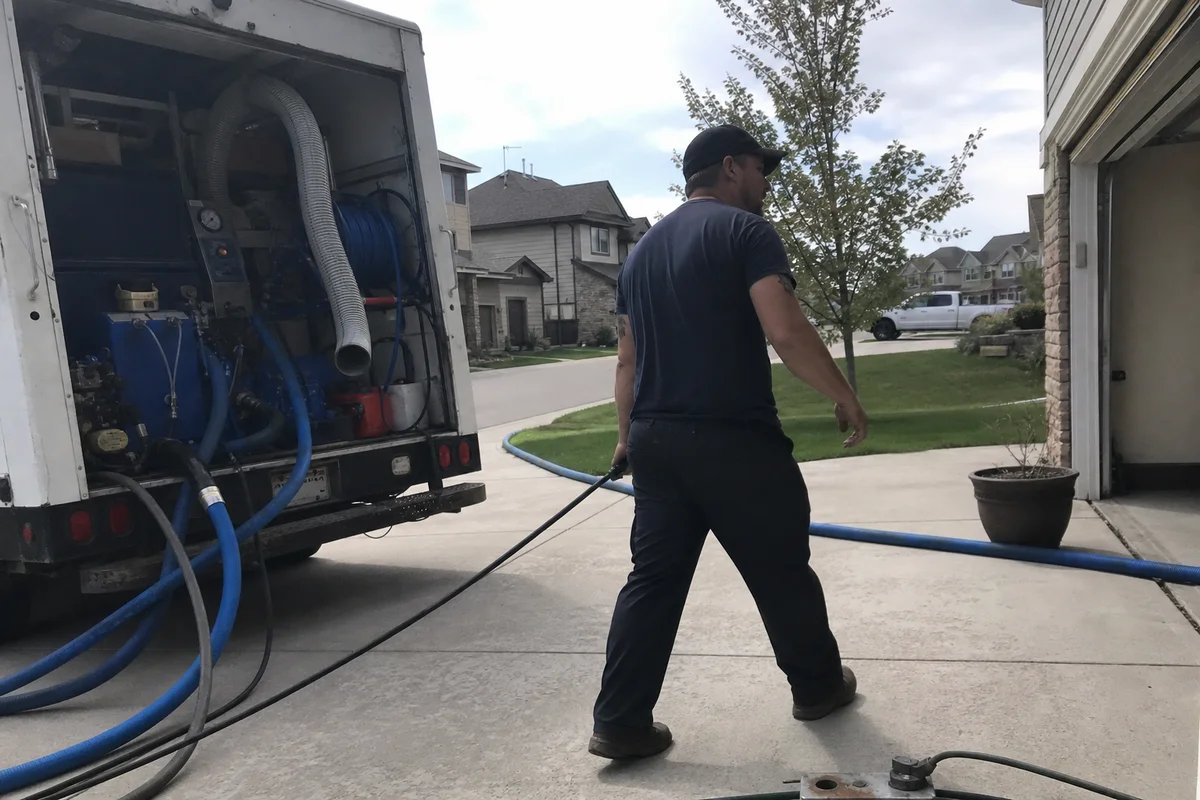
We answer 24/7 at (720) 842-1950. A crew is dispatched immediately and typically on-site within the hour for local Castle Rock, Parker, Highlands Ranch, and Lone Tree calls. We extract, dry, document for your insurance claim, and bill your carrier directly.
Hours 2-24: what happens next
Once our crew arrives:
- Extraction with truck-mounted or portable equipment
- Moisture mapping — thermal imaging and moisture meters find hidden water
- Structural drying setup — LGR dehumidifiers and air movers placed based on psychrometric calculations
- Documentation package for your adjuster
- Content triage — pack out what needs off-site restoration
Drying typically runs 3 to 5 days with daily monitoring. When materials reach the dry standard, equipment comes down and reconstruction (if needed) begins.
Insurance in the first 24 hours
If you have homeowners insurance, notify your carrier as soon as the immediate emergency is under control. Provide your policy number and a brief description of what happened — you don’t need a full scope yet. The carrier will assign a claim number and (in most cases) an adjuster.
If we’re doing the work, we handle Xactimate scoping, adjuster coordination, and direct billing. In most covered losses you pay only your deductible. See our Colorado water damage insurance guide for what’s typically covered.
Bottom line
The first hour matters more than the next twenty. Safety first, then document, then move what you can save, then call for professional extraction and drying. Every hour of delay narrows what can be saved and increases the cost of recovery.
We’re 24/7 at (720) 842-1950 for water damage restoration — call now if it’s happening. For non-urgent questions or a free inspection, reach out here.